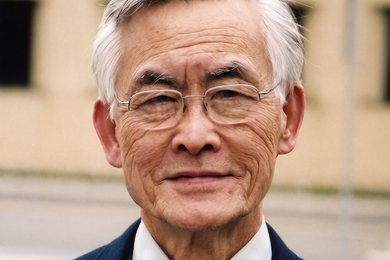
Michael Tsan Ty, a 28-year-old neurologist who earned his medical degree at the MIT-Harvard Division of Health Sciences and Technology, died April 3 when scaffolding crushed his car on Boylston Street in Boston.
While at the Division of Health Sciences and Technology (HST), Ty spent 18 months working in the laboratory of Mriganka Sur, head of the Department of Brain and Cognitive Sciences.
"He was very kind, very skilled and very creative," Sur said.
Ty, a native of Atherton, Calif., majored in neuroscience at Johns Hopkins University, where he graduated Phi Beta Kappa in 1999. After earning his medical degree from HST in 2004, he became a clinical fellow in neurology at Massachusetts General Hospital and at Brigham & Women's Hospital.
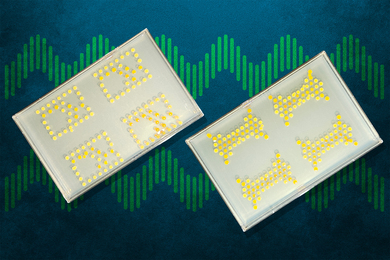
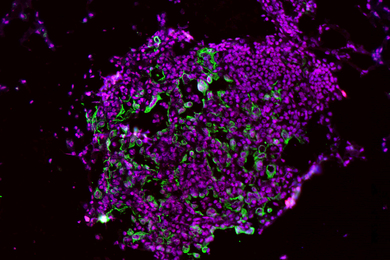
In Ty's M.D. thesis research at MIT, "he combined materials science and micropatterning with neuroscience in a very clever way," to create a fixed substrate for growing brain cells in culture, Sur said. He applied that technique to a study of how the strength of neuronal connections, or synapses, varies depending on how many neighbors a neuron has.
Ty, who lived in Roslindale, is survived by his wife, Robin; his parents, George P. and Bonnie Tsan Ty; a sister, Monica; and many friends and colleagues.
A private memorial service is planned.
A version of this article appeared in MIT Tech Talk on April 12, 2006 (download PDF).