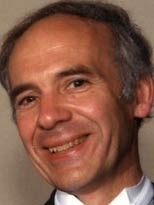
Steven H. Groves, a physicist at Lincoln Laboratory for more than 40 years, died at Lahey Clinic on March 27 after being hit by an SUV on his daily bicycle commute to Lincoln Lab. He was 72.
A memorial service will be held May 7 at 3 p.m. at the First Parish Unitarian Universalist Church, 7 Harrington St., Lexington, Mass.
Groves was known for his breakthrough research on the band structure of gray tin, published in 1963, the year he earned his Ph.D. from Harvard University. After a year as a research fellow at Harvard, he joined Lincoln Laboratory, where his work on crystal growth and semiconductor materials led to the fabrication of diode lasers and high-gain and high-speed photo detectors.
Born in Madison, Wis., Groves received his bachelor's degree from Antioch College in Ohio in 1957. He was an avid outdoorsman and enjoyed kayaking, skiing, biking and playing with his grandchildren.
He was looking forward to celebrating his 50th wedding anniversary in England in July with his wife, children and grandchildren.
He is survived by his wife, Anne DeCecco Groves; a son, Eric Groves of Acton, Mass.; a daughter, Katherine Groves of Paradise Valley, Ariz.; two brothers, Thomas Groves of Naperville, Ill., and Roderick Groves of Albuquerque, N.M.; a sister, Susan Groves of Berkeley, Calif.; and four grandchildren.
Donations may be made to the Wilderness Society, 1615 M St. NW, Washington, DC 20036.
A version of this article appeared in MIT Tech Talk on April 5, 2006 (download PDF).