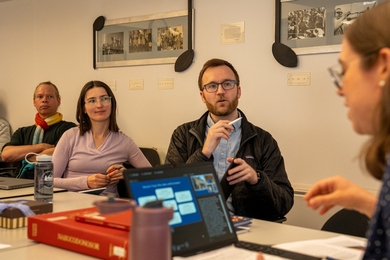
The new and improved reading room on the fifth floor of the Student Center officially opened with an afternoon bash in the Moran Lounge on Sept. 21.
The party featured an MIT string quartet, student-friendly fare including Buffalo wings, crudit̩s, sushi and nachos as well as speeches from Larry Benedict, dean of student life, and Phillip Walsh, the director of the campus activities complex.
"This is a space students have shown time and again how important it is to them," Walsh said during the opening.
Benedict spoke of the room's significance as a true example of student input and collaboration. Several years ago, a group of students really pushed for the reading room. "Students know what is best for them," said Benedict, who called the room a "student initiative and student proposal."
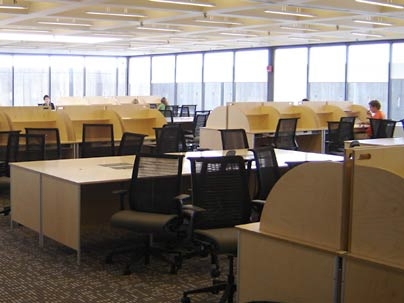
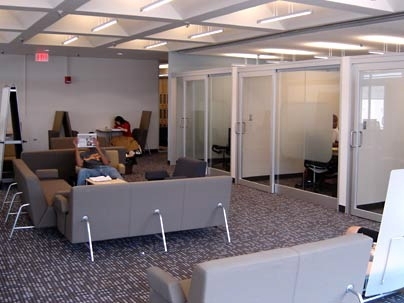
The new room features better lighting, a brighter color scheme and soft lounge furniture.
The space is the second renovated study space to open this fall, following the Building 10 community lounge Sept. 15.
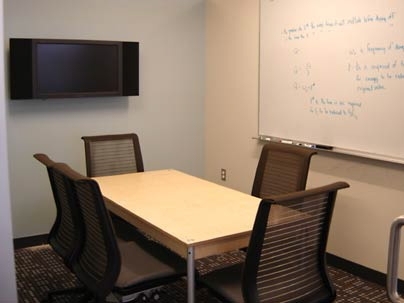
The theme of the student center renovation is collaboration, Walsh said. The transformed space now offers seven group study spaces of varying sizes, equipped with LCD panels and electronic white boards, to accommodate groups from four to 10 students.
There is also space for individual study with desks that convert into study carrels, separated from the group study area by a sound sealed partition.
The reading room will be open 24 hours a day.
A version of this article appeared in MIT Tech Talk on October 18, 2006 (download PDF).