When the Cambridge University Musical Society Orchestra and Chorus bill themselves as the "the biggest and best musical society in Cambridge," they're not competing with ensembles at MIT or Harvard. Founded in 1842 in the "other" Cambridge (located north of London), the 90-member orchestra will perform Mahler's Symphony No. 2 ("Resurrection") in Kresge Auditorium at 8 p.m. on Saturday, Sept. 27. Admission is $5, or free for MIT students. For more information, call 452-3494.
The combined choir will include singers from Harvard University, Boston University and MIT. The concert is part of an MIT/Cambridge University exchange facilitated through the CMI Program (Cambridge-MIT Institute). In June 2002 the MIT Symphony Orchestra traveled to England, where it performed in Cambridge University's King's College Chapel.
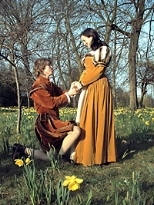
The Society's theatrical counterparts, the Cambridge University American Stage Tour (CAST), will perform "A Midsummer Night's Dream" on Monday and Tuesday, Sept. 29-30 at 7:30 p.m. in Kresge Little Theater. MIT is the final stop of CAST's trip to the United States, following stops at the University of Wisconsin, St. John Fisher College in Rochester, N.Y., Johnson State College in Vermont, Harvard and Yale.
Tickets for "A Midsummer Night's Dream" are $8 ($6 for students) and are available in Lobby 10 before the performance, or at the door. For more information, call 253-4720.
A version of this article appeared in MIT Tech Talk on September 24, 2003.