CECIL E. FEAVER
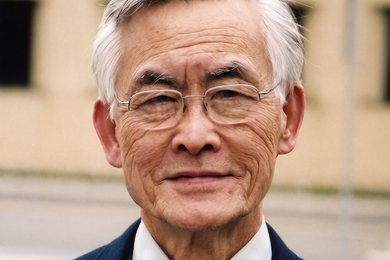
Cecil E. Feaver of Boston, a technical assistant in the Center for Advanced Educational Services since 1982, died on Sept. 25 of pneumonia and brain cancer at the age of 59. He was diagnosed with HIV in 1991 and retired on disability from MIT in 1995. Feaver was an active singer and choral director in the Boston area; he often recruited MIT colleagues to sing in his choir at the Congregational Church of Weston or his men's a cappella group, Feaver Pitch.
Feaver is survived by his partner, Gregory Makowski; former partner Harry Blaisdell; two sons, Maury and Aaron of San Francisco; their mother Ann Tisdel Feaver; his mother, Ruth; a brother, Claude of Visalia, Calif.; a sister, Jo Ann of Davis, Calif.; a grandson, and several nieces and nephews. A memorial service will be held Thursday, Nov. 1 at 7 p.m. at the Church of the Covenant, 67 Newbury St., Boston. In lieu of flowers, contributions in his honor may be sent to the Boston Living Center, 29 Stanhope St., Boston, MA 02116.
MARSHA LEVINE
Marsha Levine of Somerville, an administrative assistant in the Department of Nuclear Engineering, died on Oct. 11 at the age of 52. She had worked at MIT since 1975 for the department in several capacities, running its reading room, working in its graduate office and maintaining its web site. She is survived by a sister, Marion Lawrence of Cornwall, N.Y., and an uncle. Donations in her memory may be made to the American Heart Association, the American Diabates Association or the American Cancer Society.
A version of this article appeared in MIT Tech Talk on October 24, 2001.