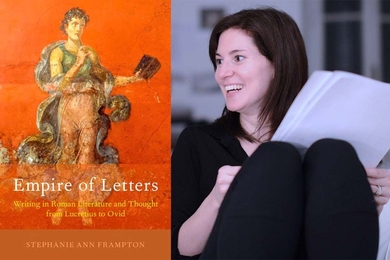
How writing technology shaped classical thinking
Stephanie Frampton’s new book explores the written word in the Roman world.
Download RSS feed: News Articles / In the Media / Audio
Stephanie Frampton’s new book explores the written word in the Roman world.
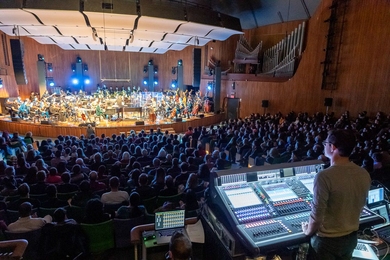
Cross-disciplinary projects at MIT probe the technological and aesthetic limits of sound.

Production kicks off MIT Performing series promoting a research-based artistic practice that aims to serve as a new platform for contemporary performance.

Headquarters would replace Building 44, forming an “entrance to computing” near the intersection of Vassar and Main streets.

Less data-sharing among firms can actually lead to more collusion, economists find.

An increasingly popular program is drawing students eager to build — and use — the next generation of tools for making music.

At a hands-on event, East Campus dorm students learned about fire safety from members of the Cambridge Fire Department and staff from several MIT departments.

An avid traveler, organizer, and educator, senior Kathleen Schwind helps others develop skills in negotiation and leadership.
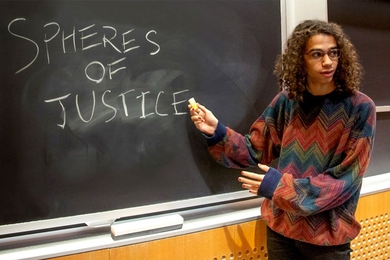
In Bernardo Zacka’s class 17.01, students explore human values and the many ways of imagining a just society.
An artificial intelligence-powered laugh track amuses and unsettles in interactive installations by Jonny Sun.

Economist Alexander Wolitzky uses game theory to model institutions, networks, and social dynamics.
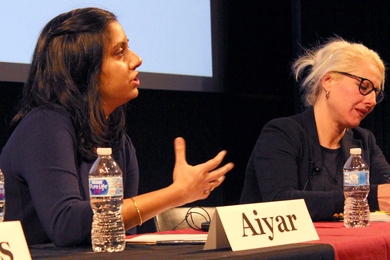
MIT Starr Forum panel discusses extreme forms of populism that have endangered basic civil liberties and spawned intolerant rhetoric.

The new center will explore how MIT can use virtual reality and artificial intelligence and other technologies to better serve human needs.

MIT AI Ethics Reading Group was founded by students who saw firsthand how technology developed with good intentions could be problematic.

Commitment signals transformative moment for the Institute’s music programming.