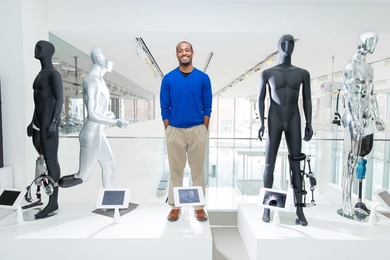
Enhancing movement with computational models
PhD student David Hill maps human locomotion in detail to improve rehabilitative and assistive robotics.
PhD student David Hill maps human locomotion in detail to improve rehabilitative and assistive robotics.
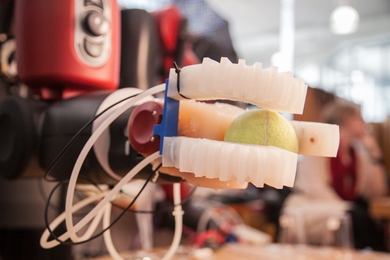
Team from Computer Science and Artificial Intelligence Lab develops silicone rubber gripper and advanced object-identification algorithms.

Seeking to reduce traffic casualties, center will focus on robotics and artificial intelligence systems.
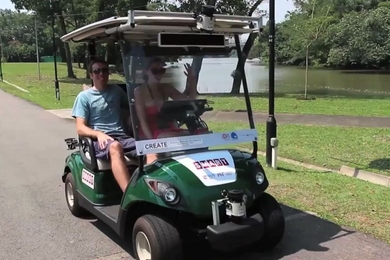
Autonomous vehicles share sidewalk space with pedestrians in six-day trial in Singaporean public garden.
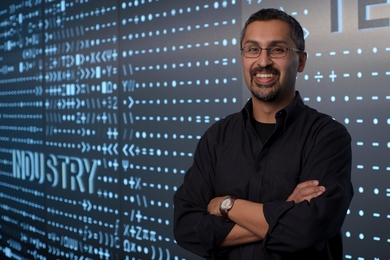
Nick Roy develops unmanned aerial vehicles that can operate autonomously in constrained spaces and unmapped environments.
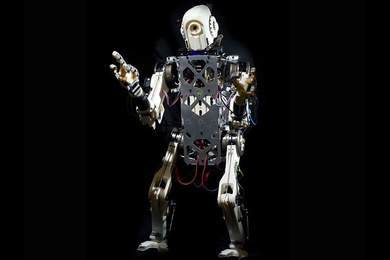
New human-machine interface keeps robot balanced, with human reflexes.
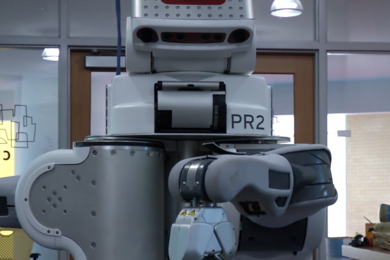
Bots from the MIT Computer Science and Artificial Intelligence Lab work together more effectively in the face of uncertainty.
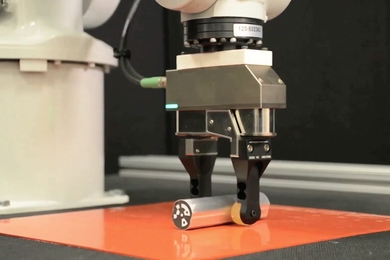
Engineers use the environment to give simple robotic grippers more dexterity.
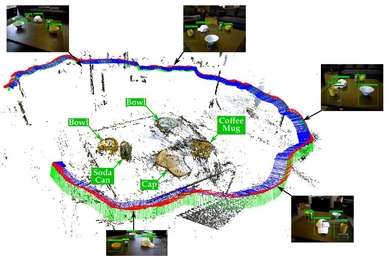
Robots’ maps of their environments can make existing object-recognition algorithms more accurate.

Engineers from iRobot provide workshop for students from the Boston area in the MIT STEM Mentoring Program.
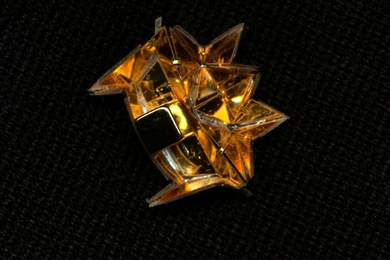
Controlled by magnetic fields, tiny robot climbs inclines, swims, and carries loads twice its weight.
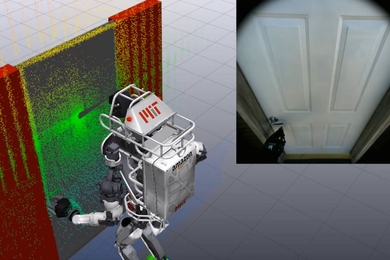
MIT team based robotic control algorithms on cutting-edge theory.
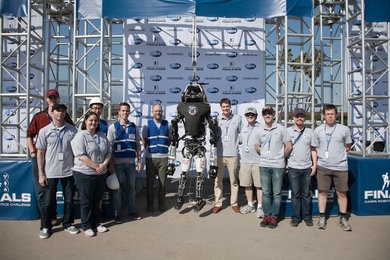
CSAIL team just misses winning the grand prize after programming a 400-lb humanoid robot to lift beams, climb stairs, and drive a car.