Study: The ocean’s color is changing as a consequence of climate change
The color changes reflect significant shifts in essential marine ecosystems.
Study shows moving can help foster a more robust social network, by strengthening “long ties” with others.
A new technique uses remote images to gauge the strength of ancient and active rivers beyond Earth.
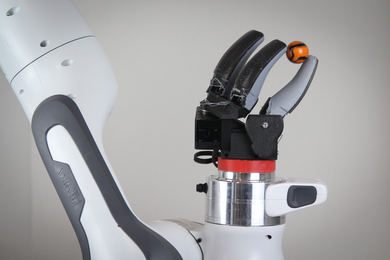
New soft-bodied robots that can be controlled by a simple magnetic field are well suited to work in confined spaces.
This AI system only needs a small amount of data to predict molecular properties, which could speed up drug discovery and material development.
BioAutoMATED, an open-source, automated machine-learning platform, aims to help democratize artificial intelligence for research labs.
A new approach for identifying significant differences in gene use between closely-related species provides insights into human evolution.
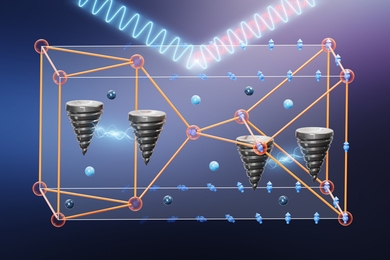
The images shed light on how electrons form superconducting pairs that glide through materials without friction.
A new technique produces perovskite nanocrystals right where they’re needed, so the exceedingly delicate materials can be integrated into nanoscale devices.
A new computational method facilitates the dense placement of objects inside a rigid container.
The foundry gives the wider research community access to Lincoln Laboratory’s expertise in fabricating quantum circuits.
The new strategy may enable engineered T cells to eradicate solid tumors such as glioblastoma.
The disorganized arrangement of the proteins in light-harvesting complexes is the key to their extreme efficiency.
Training artificial neural networks with data from real brains can make computer vision more robust.
A new dataset can help scientists develop automatic systems that generate richer, more descriptive captions for online charts.