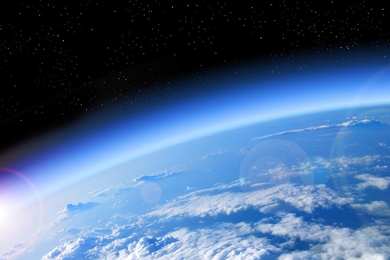
Study pinpoints timing of oxygen’s first appearance in Earth’s atmosphere
Beginning 2.33 billion years ago, atmospheric oxygen built up in just 10 million years.
Beginning 2.33 billion years ago, atmospheric oxygen built up in just 10 million years.
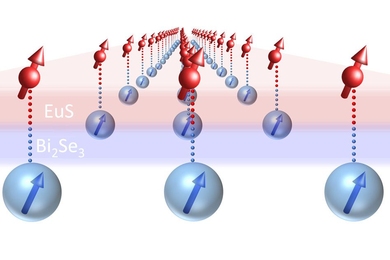
Combining two thin-film materials yields surprising room-temperature magnetism.
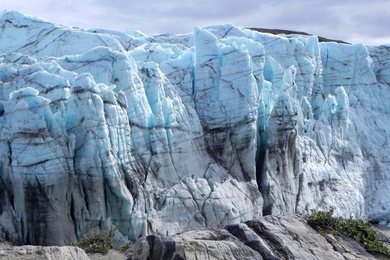
Technique uses vibrations generated by ocean waves to monitor ice sheet’s seasonal changes.
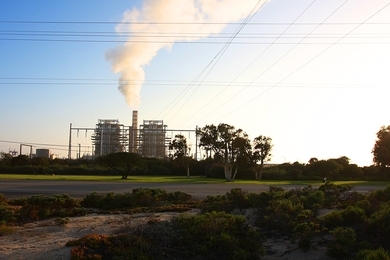
Aerosol emissions would slow warming but suppress rainfall.

Chemistry professor receives the NSF's highest honor for an outstanding researcher under the age of 35.
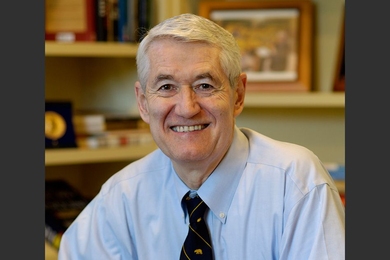
Former MIT physics professor and dean of science recognized by the National Science Board.
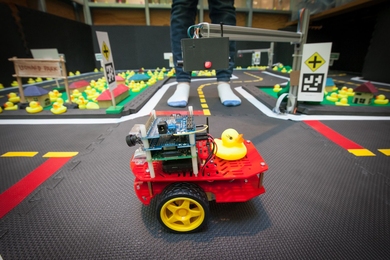
“Duckietown” class at Computer Science and Artificial Intelligence Lab teaches autonomy, aims to become global research platform.
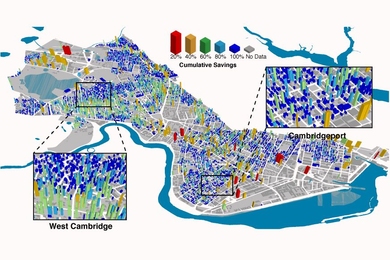
Retrofitting a small portion of buildings would have big impact on cities’ carbon emissions.

James Swan and Konstantin Turitsyn are among 160 young scientists and engineers poised to explore new frontiers and inspire a future generation of scholars.

New theory, inspired by chocolate coatings, predicts thickness of thin shells.
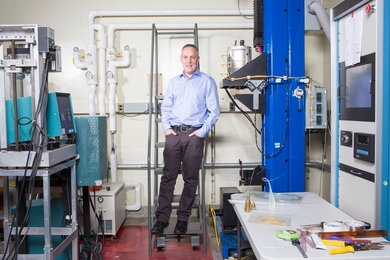
National public-private consortium led by MIT will involve manufacturers, universities, agencies, companies.
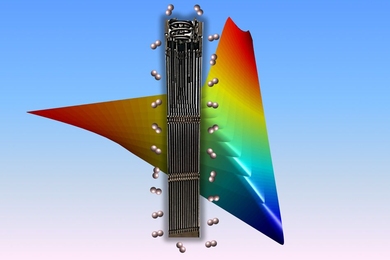
New approach to preventing embrittlement could be useful in nuclear reactors.
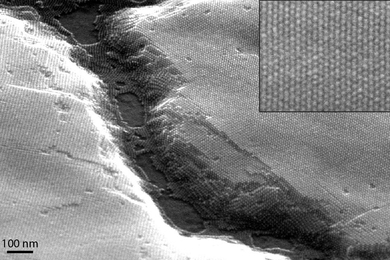
A new approach gives a real-time look at how the complex structures form.

Mapping whale calls, researchers find the predators feed in species-specific hotspots.
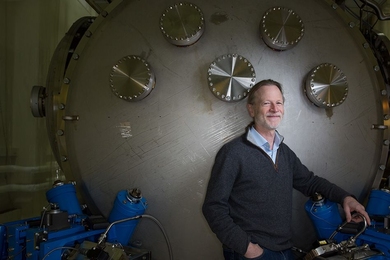
MIT’s David Shoemaker testifies before Congress on the significance of LIGO.