
Chemists discover why photosynthetic light-harvesting is so efficient
The disorganized arrangement of the proteins in light-harvesting complexes is the key to their extreme efficiency.
The disorganized arrangement of the proteins in light-harvesting complexes is the key to their extreme efficiency.

After the James Webb Space Telescope’s first year in service, astronomers are awash in new observations that illuminate the oldest stars and galaxies.
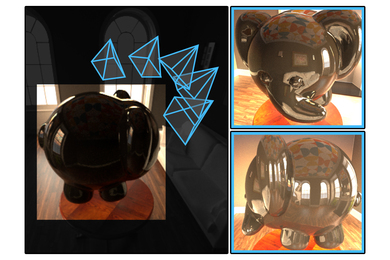
A new computer vision system turns any shiny object into a camera of sorts, enabling an observer to see around corners or beyond obstructions.

The 2D map of this “disk wind” may reveal clues to galaxy formation.
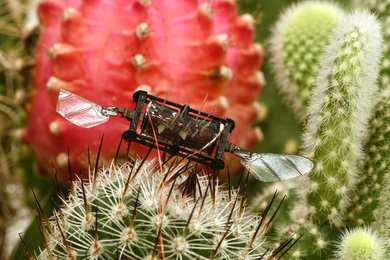
New repair techniques enable microscale robots to recover flight performance after suffering severe damage to the artificial muscles that power their wings.

Located in the new MIT Welcome Center in Building E38, the installation expresses the dynamic, vibrant culture of MIT through the medium of programmable light.

A new method can produce a hundredfold increase in light emissions from a type of electron-photon coupling, which is key to electron microscopes and other technologies.

Researchers have developed a programmable optical device for high-speed beam steering.
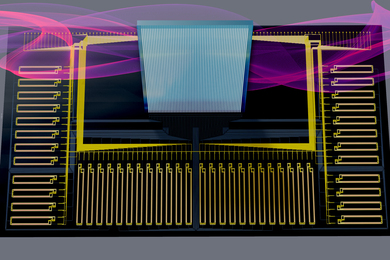
A new method uses optics to accelerate machine-learning computations on smart speakers and other low-power connected devices.

The stars circle each other every 51 minutes, confirming a decades-old prediction.
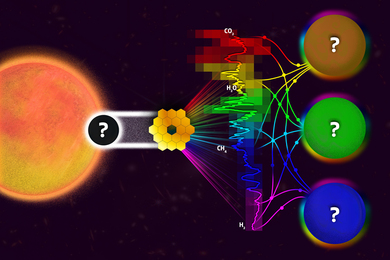
Refining current opacity models will be key to unearthing details of exoplanet properties — and signs of life — in data from the powerful new telescope.
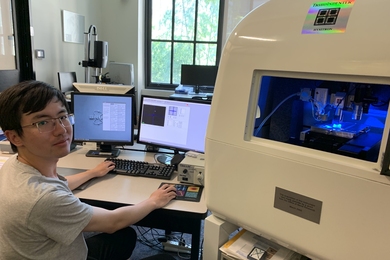
The materials’ stiffness increases up to 40 percent, in a reversible effect, the researchers report in a study that also explains the phenomenon's atomic origins.

The technique opens a door to manufacturing of pressure-monitoring bandages, shade-shifting fabrics, or touch-sensing robots.

A new technique could improve the precision of atomic clocks and of quantum sensors for detecting dark matter or gravitational waves.
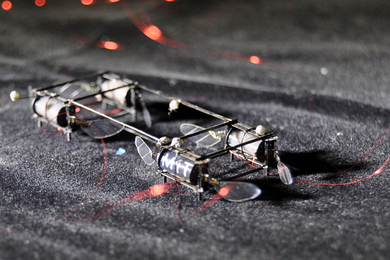
Inspired by fireflies, researchers create insect-scale robots that can emit light when they fly, which enables motion tracking and communication.