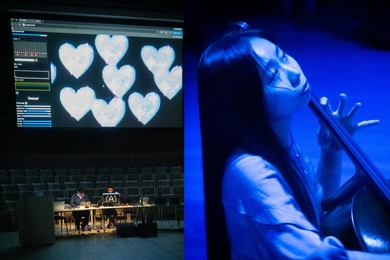
Inaugural Music Technology Research Showcase celebrates work of new graduate program’s initial students
Associate Professor Anna Huang delivers the keynote address, “In Search of Human-AI Resonance,” to a capacity crowd.
Download RSS feed: News Articles / In the Media / Audio
Associate Professor Anna Huang delivers the keynote address, “In Search of Human-AI Resonance,” to a capacity crowd.
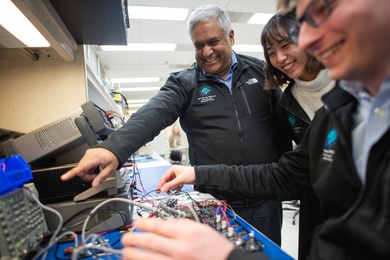
Anantha P. Chandrakasan is “Committed to Caring” for redefining mentorship through presence and perspective.

To help robots do chores in places like homes and factories, a new approach from MIT uses one language model to clarify users’ instructions, then another to ignore irrelevant info.

A new system, known as Murakkab, optimizes the design and deployment of multistep workflows that power AI applications.
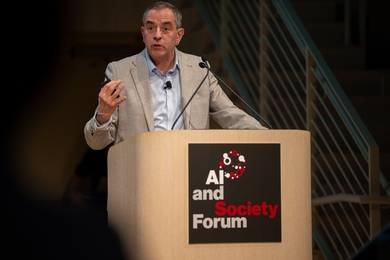
During the AI and Society Forum, leading MIT researchers examined critical questions about AI’s influence on employment and democracy.
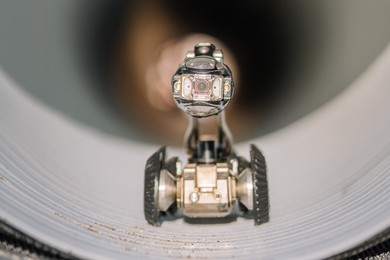
Researchers combined an efficient algorithm with dedicated hardware to rapidly generate 3D maps for navigation using minimal memory and power.
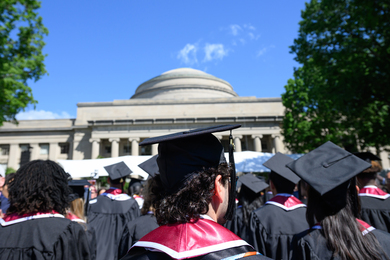
Ranking at the top for the 15th year in a row, the Institute also places first in 12 subject areas.
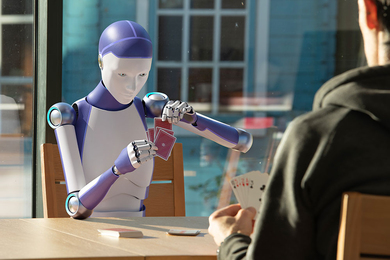
Researchers show that for certain kinds of games, an overlooked class of algorithms performs much better than expected.
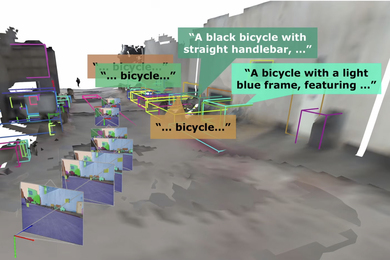
A new spatial memory system for robots efficiently captures details about the objects they see while exploring their environment.
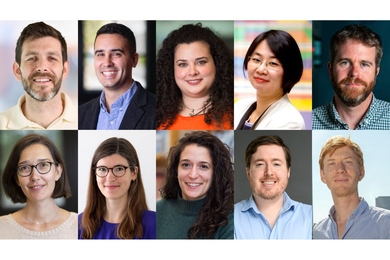
Ten faculty members have been granted tenure in five units across MIT’s School of Engineering.
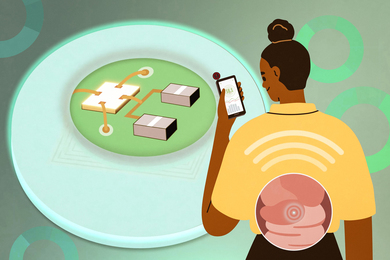
After being swallowed, the devices could offer continuous monitoring of patients who are sick or at risk of hypothermia.

MIT researchers provide a major upgrade to the nearly century-old idea of random utility models.
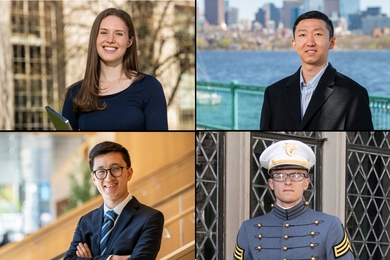
The fellowships in applied sciences, engineering, and mathematics recognize doctoral students who are pursuing solutions to the most pressing challenges in science and technology.
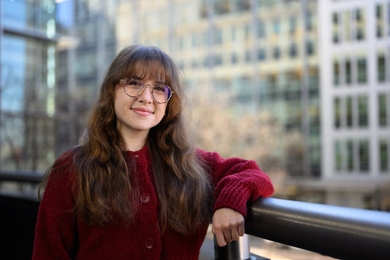
Biology PhD student Giselle Valdes studies stem cell regeneration while encouraging aspiring students and researchers.

A new kernel called Fractal gives researchers a cleaner view of what’s happening inside a processor, and has already surfaced previously unknown behavior in Apple’s M1.