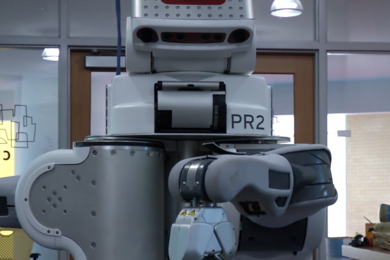
Robots collaborate to deliver meds, supplies, and even drinks
Bots from the MIT Computer Science and Artificial Intelligence Lab work together more effectively in the face of uncertainty.
Download RSS feed: News Articles / In the Media / Audio
Bots from the MIT Computer Science and Artificial Intelligence Lab work together more effectively in the face of uncertainty.
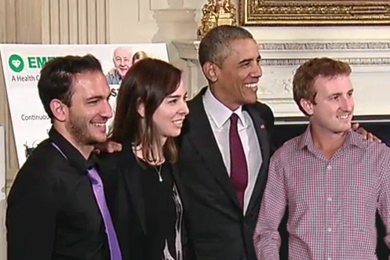
Wireless motion-tracking device from CSAIL researchers is among highlighted innovations at “Demo Day.”

MIT spinout Jisto helps companies optimize utilization with real-time deployment, monitoring, and analytics.
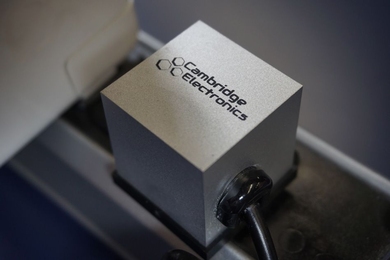
Gallium nitride electronics could drastically cut energy usage in data centers, consumer devices.

Researchers mount successful attacks against popular anonymity network — and show how to prevent them.
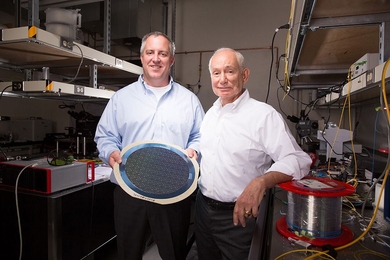
Partnership of government, industry, and academia will pursue integration of optical devices with electronics.
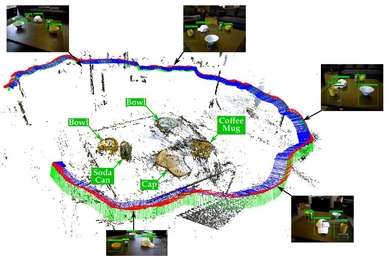
Robots’ maps of their environments can make existing object-recognition algorithms more accurate.

New model predicts wind speeds more accurately with three months of data than others do with 12.

New network design exploits cheap, power-efficient flash memory without sacrificing speed.

Senior Cimran Virdi is vaulting into the NCAA record books as an engineering major at MIT — a school with a history of success in track and field.

What takes coders months, CSAIL’s “Helium” can do in an hour.

Sensors, memory switches, and circuits can be encoded in a common gut bacterium.

Longtime member of the MIT faculty was a dedicated researcher and educator in the field of electromagnetism.
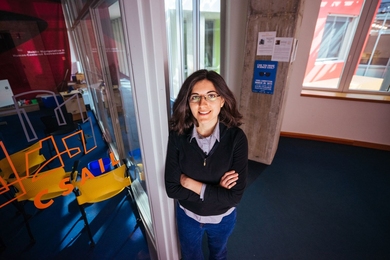
A high-school outreach program first brought Tamara Broderick to MIT in 2002. Now she's back, as an assistant professor in EECS.