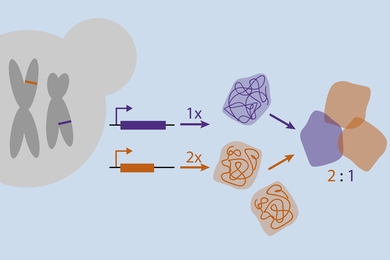
Tracking the footprints of protein synthesis
Researchers refine a method to quantify protein production, show that the precision with which bacteria and eukaryotes tune their gene expression is remarkably similar.
Researchers refine a method to quantify protein production, show that the precision with which bacteria and eukaryotes tune their gene expression is remarkably similar.
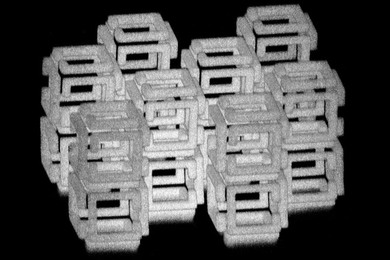
It’s not quite the Ant-Man suit, but the system produces 3-D structures one thousandth the size of the originals.
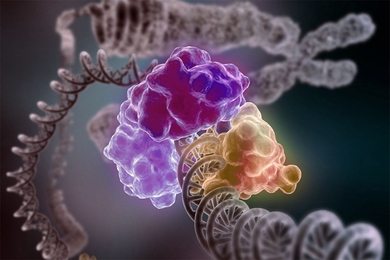
A new study linking RNA processing to DNA repair may open new avenues to cancer therapy.
Enzyme can target almost half of the genome’s “ZIP codes” and could enable editing of many more disease-specific mutations.

Biological engineers design RNA circuits that enable precise control over the dose of therapeutic protein a patient receives.
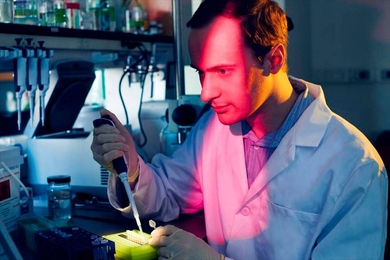
Cryptography techniques to screen synthetic DNA could help prevent the creation of dangerous pathogens, argues Professor Kevin Esvelt.
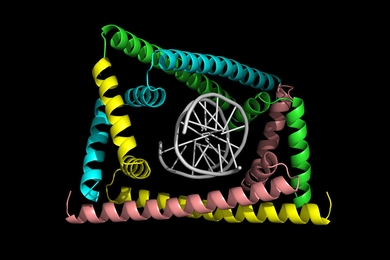
Researchers identify an essential protein that helps enzymes relax overtwisted DNA so each strand can be copied during cell division.
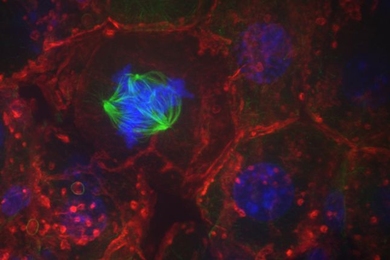
Biologists discover that the environment surrounding a cell plays an integral role in its ability to accurately segregate its chromosomes.

Biophysicist will investigate the biology of RNA aggregation.
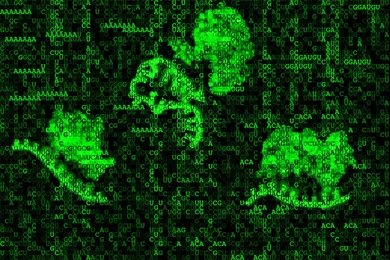
Scientists leverage one step, unbiased method to characterize the binding preferences of more than 70 human RNA-binding proteins.
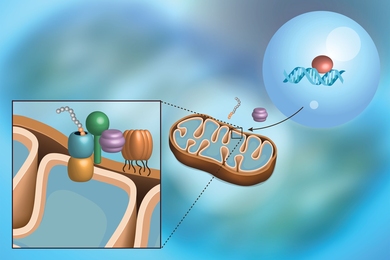
Scientists discover a pathway that monitors a protein import into mitochondria and elicits a cellular response when the process goes awry.
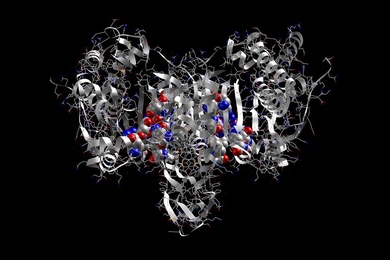
New discovery suggests that all life may share a common design principle.
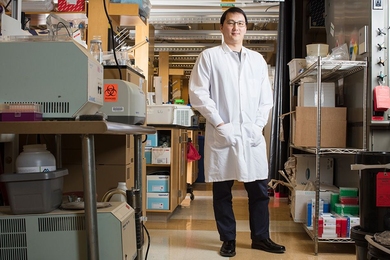
Synthetic biologist hopes to develop treatments for cancer and other diseases.
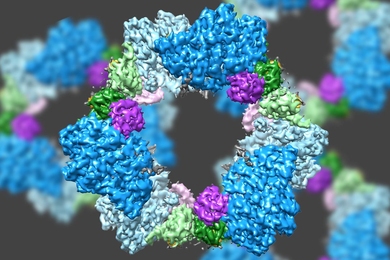
New finding suggests differences in how humans and bacteria control production of DNA’s building blocks.