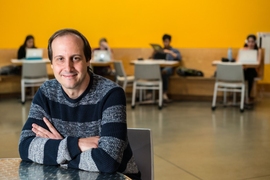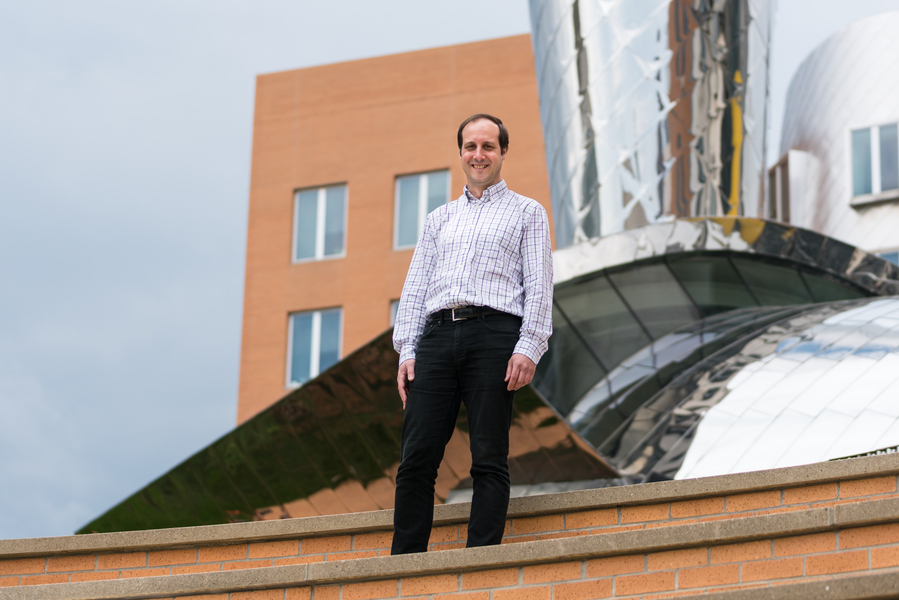
Antonio Torralba, faculty head of Artificial Intelligence and Decision Making within the Department of Electrical Engineering and Computer Science (EECS) and the Thomas and Gerd Perkins Professor of Electrical Engineering and Computer Science, has been selected as a 2021 Fellow by the Association for the Advancement of Artificial Intelligence (AAAI). AAAI Fellows are selected in recognition of their significant and extended contributions to the field (contributions which typically span a decade or more), including technical results, publications, patent awards, and contributions to group efforts.
Torralba received a degree in telecommunications engineering from Telecom BCN in Spain in 1994 and a PhD in signal, image, and speech processing from the Institut National Polytechnique de Grenoble, France in 2000. From 2000 to 2005, he received postdoc training at both the Department of Brain and Cognitive Sciences and the Computer Science and Artificial Intelligence Laboratory (CSAIL) at MIT. From 2017 to 2020, he was the MIT director of the MIT-IBM Watson AI Lab, and the inaugural director of the MIT Quest for Intelligence from 2018 to 2020. He is currently a member of both CSAIL and the Center for Brains, Minds and Machines.
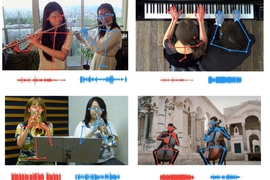
Torralba’s research primarily focuses upon computer vision, machine learning, and the challenge of building computer systems that mimic human visual perception; additionally, Torralba is interested in neural networks, common-sense reasoning, computational photography, image databases, the intersections between visual art and computation, and the development of systems that can perceive the world through multiple senses (including audition and touch).
The author or co-author of over 300 papers, Torralba has been cited over 71,000 times on Google Scholar. He is an associate editor of the International Journal in Computer Vision, and served as program chair for the Computer Vision and Pattern Recognition conference in 2015. He has received the 2008 National Science Foundation Career Award, the Best Student Paper Award at the IEEE Conference on Computer Vision and Pattern Recognition in 2009, and the 2010 J. K. Aggarwal Prize from the International Association for Pattern Recognition. In 2017, he received the Frank Quick Faculty Research Innovation Fellowship and the Louis D. Smullin ('39) Award for Teaching Excellence. Earlier in 2020, he received the PAMI Mark Everingham Prize.