The Abdul Latif Jameel Clinic for Machine Learning in Health (J-Clinic) has announced more than $2.3 million in funding for 18 projects involving principal investigators from departments and labs within engineering, architecture and planning, science, and management. J-Clinic received a total of 43 proposals.
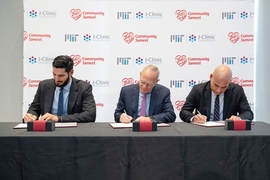
Launched this fall, J-Clinic is the fourth major collaborative effort between MIT and Community Jameel, the social enterprise organization founded by Mohammed Abdul Latif Jameel ’78. J-Clinic aims to create high-precision, affordable, and scalable machine learning technologies in areas of health care ranging from diagnostics to pharmaceuticals.
The projects will harness the power of artificial intelligence technologies to optimize early detection and prevention of ailments including cancer, epilepsy, mental health, cognitive impairment, and congestive heart failure. Other projects include repurposing existing drugs and optimizing electronic health records. In addition, a $50,000 grant funded by J-Clinic in collaboration with the MIT Deshpande Center for Technological Innovation will support AI-focused research into the rapid diagnosis of bacterial infection.
“We were impressed by the depth, creativity, and scope of the proposals we received,” says Anantha P. Chandrakasan, dean of the School of Engineering and the Vannevar Bush Professor of Electrical Engineering and Computer Science, who chairs J-Clinic.
“We are excited to be taking this important step with the inaugural round of J-Clinic research funding,” says Fady Jameel, president of international operations at Community Jameel. “Through the research funded by these grants, J-Clinic is harnessing the power of machine learning and taking the fight to cancer, Alzheimer’s, and other diseases that affect the lives of people around the world.”
The technologies and solutions will be applied to numerous health care systems and clinical settings around the globe, in developed and developing countries alike, to prevent and detect disease regardless of resources.