Researchers from MIT have discovered simple rules of assembly of ocean microbiomes that degrade complex polysaccharides in coastal environments. Microbiomes, or microbial communities, are composed of hundreds or thousands of diverse species, making it a challenge to identify the principles that govern their structure and function.
The findings indicate that marine microbiomes can be simplified by grouping species into two types of functional modules. The first type contain polysaccharide specialists that produce the enzymes required to break down the complex sugars. The second type contains species that consume simple metabolic byproducts released by the specialist degraders and are therefore independent of the polysaccharide. This partitioning reveals a simple design for the microbiome: a trophic network in which energy is funneled from degraders to consumers.
“Our work reveals fundamental principles of microbial community assembly that can help us make sense of the vast diversity of microbes in the environment,” states Otto X. Cordero, principal investigator on the research and associate professor in the Department of Civil and Environmental Engineering (CEE).
Cordero’s co-authors on the paper, which was published in Current Biology, include CEE research affiliates Tim Enke and Manoshi S. Datta, CEE postdoc Julia Schwartzman, and Computational and Systems Biology Program research affiliate Nathan Cermak, as well as researchers from science and technology university ETH Zurich in Switzerland.
The simple trophic organization revealed by this study allowed Cordero and colleagues to predict microbiome species composition based on the profile of energy resources available to the community.
“The significance of these discoveries is that we have identified simple rules of assembly, which allows us to predict community composition and rationally design ecological systems in the lab,” emphasizes Cordero.
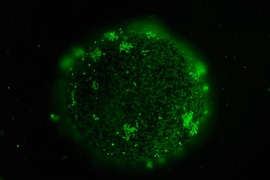
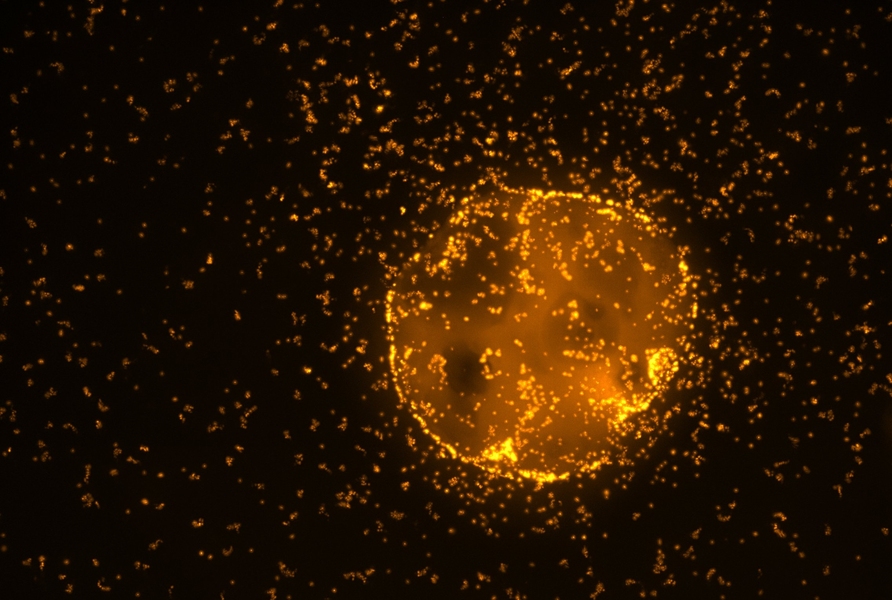
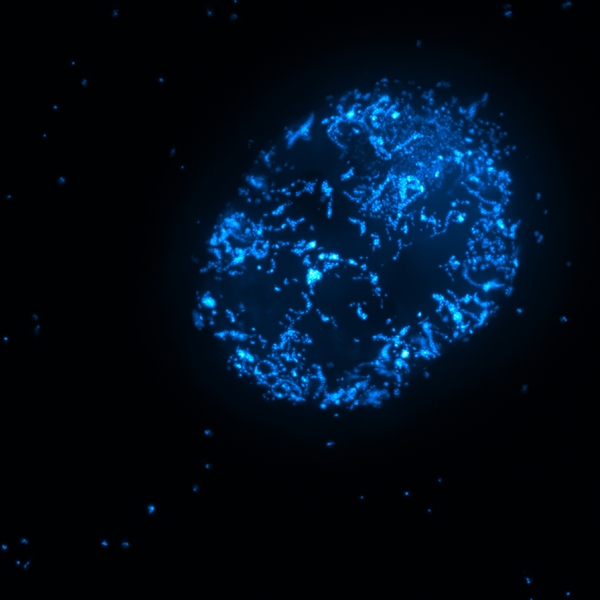
In order to investigate the modular organization of the microbial communities, the researchers conducted fieldwork with synthetic marine particles made of polysaccharides that are abundant in marine environments, such as chitin, alginate, agarose and carrageenan, as well as combinations of these substrates.
The team immersed the microscopic particles in natural samples of seawater and studied the colonization dynamics of bacteria using genome sequencing. This analysis allowed the researchers to disentangle the effect of polysaccharide composition on microbiome assembly.
“A promising application of this work is to apply these principles in order to design synthetic communities that degrade complex biological materials, such as those found in agricultural waste and animal feed,” says Cordero.