The following email was sent today to the MIT community by President L. Rafael Reif.
To the members of the MIT community,
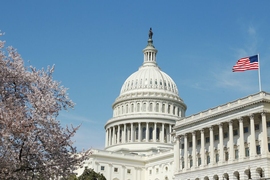
I share the news that MIT's Washington Office will soon have a new leader: policy advocate David Goldston. The role was previously held by Bill Bonvillian, who stepped down in January.
A native New Yorker, David has worked in Washington for more than 30 years, both inside and outside government, from serving as chief of staff for the House Committee on Science, to his most recent role as director of government affairs and director of the Center for Policy Advocacy for the Natural Resources Defense Council.
Drawing on his deep knowledge of federal science policy and the people who shape it, David is primed to advocate for government policies that allow science and technology to thrive, as well as for using science to shape sound policy in general. He has extensive experience in bridging partisan policy divides, beginning as an aide to a Republican congressman who was a leading voice on the environment. An adjunct professor of science policy at Georgetown, David is also eager to help our students learn how Washington works.
You can learn more about David's expertise and experience on MIT News.
MIT's Washington office has a singular record of advocating for the nation's research and educational enterprise generally, and of helping to shape important new policy directions, from advanced manufacturing to learning science. In this complex time, we need more than ever a strong and influential presence in DC.
I look forward to working with David in the town he knows so well, as we strive to make the case for all that MIT represents. Please join me in welcoming him to our team – and in thanking the advisory committee to the search, led by Professor Claude Canizares, which brought David to our attention.
Sincerely,
L. Rafael Reif