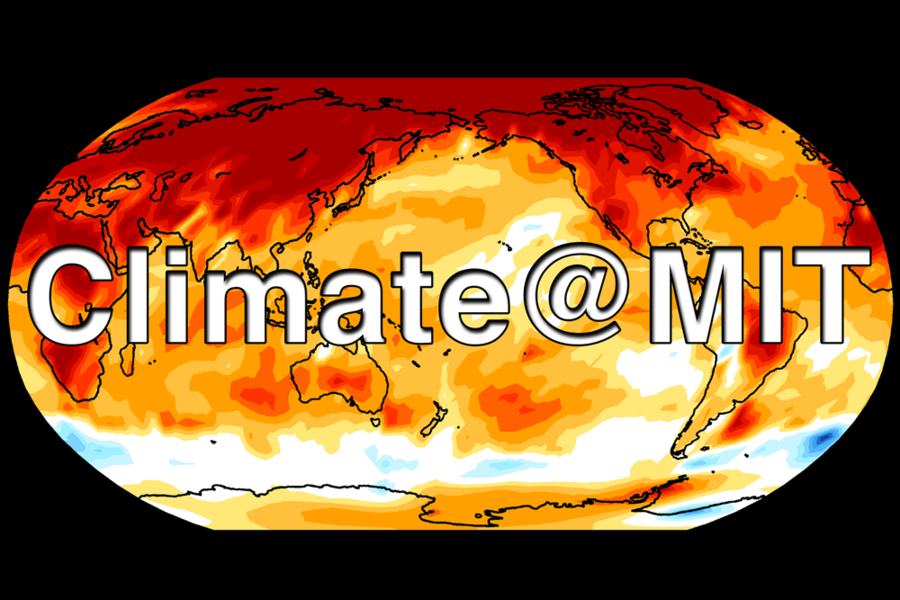
A new online publication, Climate@MIT, reports on cutting-edge climate science research on campus and in the field. Co-sponsored by MIT’s Lorenz Center and the MIT Program in Atmospheres, Oceans, and Climate (PAOC) in the Department of Earth, Atmospheric and Planetary Sciences (EAPS), Climate@MIT unifies crosscutting research at MIT aimed at tackling some of the biggest questions and issues of our time into one platform. Further, it disseminates issues that MIT climate scientists confront and demystifies the complexities that they navigate while conducting their research. While focusing on climate as a fundamental science, Climate@MIT will occasionally also comment on climate action and policy.
Researchers participating in Climate@MIT are dedicated to uncovering the causes and implications of climate changes for our past, present, and future world. Using observations, theory, and models, contributors aim to unite algorithmic, computational, physical, biogeochemical, and technological innovations to illustrate how the climate has been and is being modified through time. Elements of computational fluid dynamics, statistics, meteorology, oceanography, cryospheric and land surface processes, and computer science add definition to the larger picture of Earth’s changes. Researchers also investigate interactions between organisms, human activities, and ecosystems, which provide additional levels of feedback on natural processes affecting Earth’s climate and its changes over time.
While the field of climate science is ever-evolving as new facets are discovered, a key goal of Climate@MIT is to provide current, accurate, and relevant climate research and reporting to governments, industries, and citizens — all while helping foster an informed society, aware of the intricacies involved with climate research and armed with information to understand our changing planet.