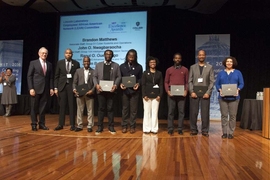
Do you have a colleague whose hard work and exceptional achievement should be recognized? Whether it’s for providing excellent service, demonstrating everyday leadership, or collaborating for results, MIT Human Resources invites you to shine the spotlight on that amazing individual — or team — by submitting a nomination for the MIT Excellence Awards and Collier Medal.
The Excellence Awards and Collier Medal are among the highest honors given to MIT employees as they acknowledge the extraordinary efforts made in the spirit of fulfilling the goals, values, and mission of the Institute.
The six MIT Excellence Award categories are:
- Advancing Inclusion and Global Perspectives
- Bringing Out the Best
- Innovative Solutions
- Outstanding Contributor
- Serving the Client
- Sustaining MIT
All nominations are accepted through Thursday, Oct. 20.
Resources to facilitate nomination — award criteria, tips for writing a nomination, FAQs, and previous award recipients — are available on the MIT Human Resources website.
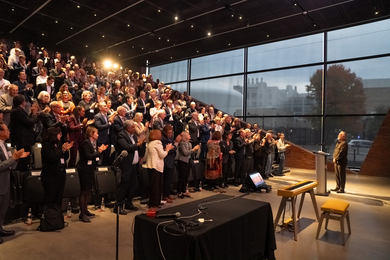
Save the date for the 2017 MIT Excellence Awards and Collier Medal awards ceremony on Thursday, March 16, 2017 at 3 p.m. in Kresge Auditorium. The entire MIT community is welcome to attend.
If you have any questions, contact Cori Champagne at 617-253-5986 or at excellence@mit.edu.