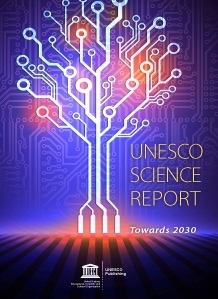
Stacy Springs and Shannon Stewart, both of the MIT Center for Biomedical Innovation, recently authored the U.S. chapter of the UNESCO Science Report, prepared every five years by international experts.
Stewart and Springs identify a number of trends related to research and development funding and policy within the United States. For example, R&D funded by government has remained fairly stagnant since 2008. In addition, among the 11 agencies that conduct the majority of federally funded research, most have seen flat R&D budgets over the past five years except for the Department of Defense. At its peak in 2010, the Department of Defense spent $88.6 billion on R&D; in 2015, it is expected to spend only $64.6 billion — a 27 percent reduction.
“R&D performed by business held steady through the recession, and may be returning to growth, but we must also be careful stewards of our basic research commitments, because withdrawing funding from them is like eating your seed corn,” says Stewart, the chapter’s lead author.
Also, the report notes that major successes in science diplomacy have paved the way for the recent United Nations climate change negotiations in Paris. Two achievements in particular are highlighted: the Joint Announcement on Climate Change, a bilateral agreement with China on emissions reduction targets; and the American Business Act on Climate Pledge, a commitment from 13 of the largest companies in the American economy to reduce emissions and increase investments in clean energy.
The report also indicates that within academia, there has been a reduction in per-student spending in public higher education and a growing backlog of postdocs; however, prestigious private universities are also establishing satellite campuses overseas to increase their global reach.