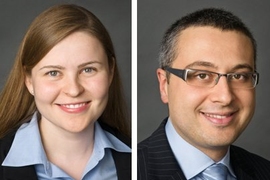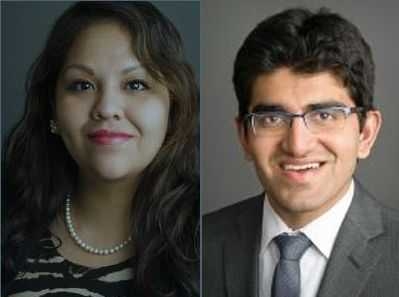
Two MIT students have been awarded 2014 Paul & Daisy Soros Fellowships for New Americans. Azucena Ramos and Arnav Chhabra will each receive a fellowship of up to $90,000 to cover tuition and stipends for graduate school.
The Paul & Daisy Soros Fellowship is a national competition open to immigrants and children of immigrants pursuing graduate school in the United States. More than 1,200 students applied this past year.
“The 2014 fellows underscore the remarkable diversity that New Americans represent," says Dr. Craig Harwood, who directs the fellowship program. "They include future leaders in science, medicine, music, documentary film, law, and politics.”
Born in California to Mexican parents, Ramos holds a BA from Smith College. She has conducted hematopoiesis and cancer research at the Harvard Stem Cell Institute. Ramos is currently enrolled at Harvard Medical School. She plans on completing an MD and a PhD in biological and biomedical sciences, focusing on cancer and stem cell biology.
Born in India, Chhabra moved to the U.S. at age 15. As a teenager, he conducted research at the MD Anderson Cancer Center in Houston, Texas, resulting in a first-author publication. He holds a BS from the University of Texas at Austin. Chhabra is currently pursuing a PhD in medical engineering and medical physics at the Harvard-MIT Health Science and Technology program and is developing an on chip model of the liver for noninvasive study of liver function.