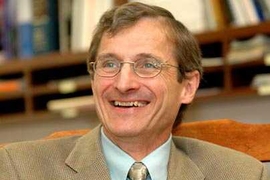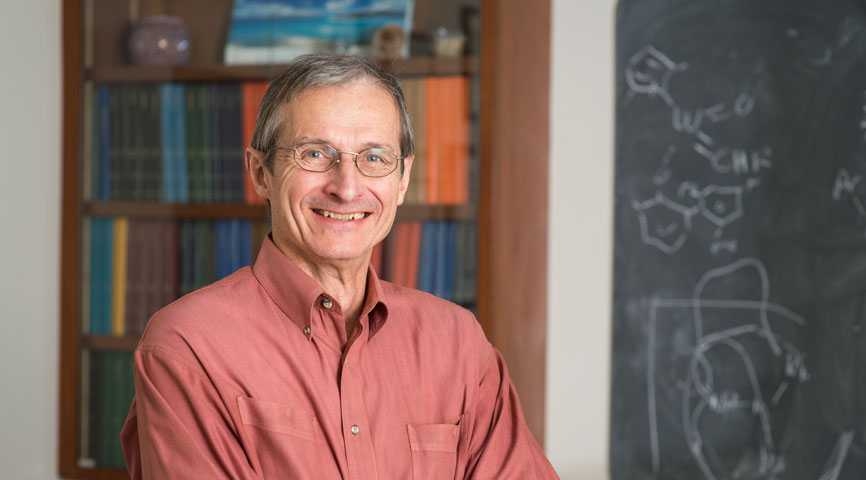
Richard R. Schrock, the Frederick G. Keyes Professor of Chemistry, has been honored with the 2014 Paracelsus Prize, the highest award given by the Swiss Chemical Society. It's awarded biennially to an internationally outstanding scientist for his or her lifetime achievements in chemical research.
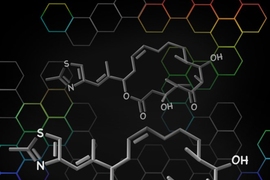
Schrock's interests include: the inorganic and organometallic chemistry of high-oxidation-state metal complexes (especially those that contain an alkylidene ligand); catalytic reactions involving alkylidene complexes (especially olefin metathesis reactions); the chemistry of high oxidation state dinitrogen and related complexes; and the controlled synthesis of polymers prepared using well-defined organometallic initiators.
He is perhaps best known for his discovery of "high-oxidation-state carbene" (alkylidene complexes), by alpha hydrogen abstraction in high-oxidation-state metal alkyl complexes, for which he received the Nobel Prize in Chemistry in 2005. Over the last several years, he has applied alkylidene chemistry to the controlled polymerization of cyclic olefins via ring-opening-metathesis polymerization (ROMP). Additionally, he has achieved the catalytic reduction of dinitrogen by molybdenum complexes at room temperature and pressure with protons and electrons. His most recent focus is on the synthesis and applications of new monoalkoxide pyrrolide (MAP) olefin metathesis catalysts for Z-selective olefin-metathesis reactions.