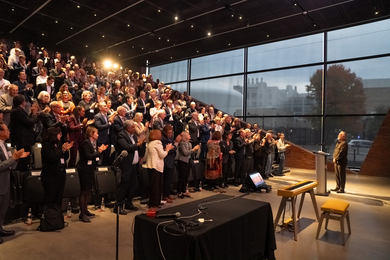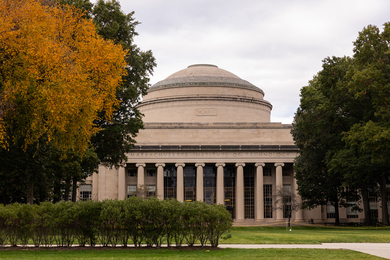
Institute Professor Robert Langer was one of six scientists honored with the 2014 Breakthrough Prize in Life Sciences, which recognizes excellence in research aimed at curing intractable diseases and extending human life. Each award included a $3 million prize, with the “aim of providing the recipients with more freedom and opportunity to pursue even greater future accomplishments.”
“Scientists should be celebrated as heroes, and we are honored to be part of today’s celebration of the newest winners of the Breakthrough Prize in Life Sciences,” said Anne Wojcicki and Sergey Brin, two of the award founders. Other founders include Silicon Valley entrepreneurs Jack Ma, founder of Alibaba Group, and his wife, Cathy Zhang; technology investor Yuri Milner and his wife, Julia; and Mark Zuckerberg and his wife, Priscilla Chan.
Langer was honored for his “discoveries leading to the development of controlled drug-release systems and new biomaterials," according to the prize.
The prize ceremony on Dec. 12 was hosted by actor Kevin Spacey, and awards were presented by the prize sponsors and by celebrities including Conan O’Brien, Glenn Close, Rob Lowe and Michael C. Hall. The event was organized in cooperation with Vanity Fair and produced and directed by Don Mischer, the producer and director of the Academy Awards, among other television and live events. Grammy-nominated singer Lana Del Ray performed live for the guests of the ceremony.
The event was televised by the Science Channel, one of the Discovery networks; it will be broadcast at 9 p.m. on Jan. 27.
For more information, visit http://breakthroughprizeinlifesciences.org.
“Scientists should be celebrated as heroes, and we are honored to be part of today’s celebration of the newest winners of the Breakthrough Prize in Life Sciences,” said Anne Wojcicki and Sergey Brin, two of the award founders. Other founders include Silicon Valley entrepreneurs Jack Ma, founder of Alibaba Group, and his wife, Cathy Zhang; technology investor Yuri Milner and his wife, Julia; and Mark Zuckerberg and his wife, Priscilla Chan.
Langer was honored for his “discoveries leading to the development of controlled drug-release systems and new biomaterials," according to the prize.
The prize ceremony on Dec. 12 was hosted by actor Kevin Spacey, and awards were presented by the prize sponsors and by celebrities including Conan O’Brien, Glenn Close, Rob Lowe and Michael C. Hall. The event was organized in cooperation with Vanity Fair and produced and directed by Don Mischer, the producer and director of the Academy Awards, among other television and live events. Grammy-nominated singer Lana Del Ray performed live for the guests of the ceremony.
The event was televised by the Science Channel, one of the Discovery networks; it will be broadcast at 9 p.m. on Jan. 27.
For more information, visit http://breakthroughprizeinlifesciences.org.