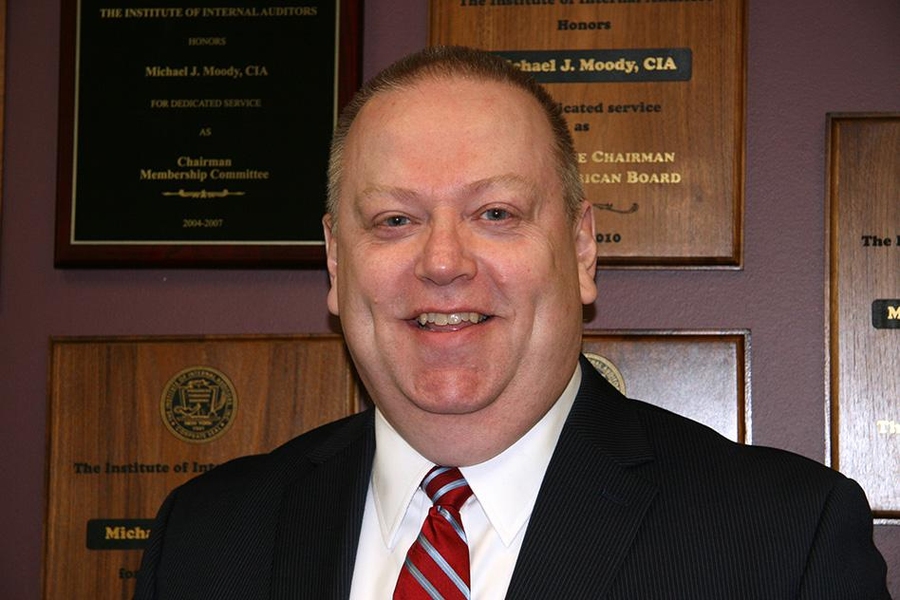
Michael J. Moody assumed the post of Institute Auditor on Feb. 18, filling the role vacated by Deborah Fisher, who transitioned into the new MIT position of Institute Risk Officer on July 1.
As Institute Auditor, Moody will be responsible for delivering audit services through a risk-based program that assesses the safeguarding of assets, adequacy of internal controls, compliance with laws and regulations, and adherence to ethical practices.
Moody brings to MIT a deep portfolio of audit, compliance, and financial experience built over 25 years in the public and private sectors. Since 2004, he has served as director of compliance in the Office for Audit and Advisory Services at Northwestern University. Earlier in his career, he was director of audits at the University of Illinois at Chicago, director of internal audit in the Office of the Comptroller for the state of Illinois, and a senior associate at the public accounting firm Coopers and Lybrand.
In addition to a bachelor of science in finance from Northeastern Illinois University, Moody has earned the certified internal auditor, certified information systems auditor, and certified inspector general designations, as well as a certification in risk management assurance.
Moody fills the position vacated by Fisher, who had served as Institute Auditor since 2000. In an announcement to his staff introducing Moody, Executive Vice President and Treasurer Israel Ruiz applauded Fisher for her exceptional leadership of the Audit Division and reliable support of the Risk and Audit Committee of the MIT Corporation.