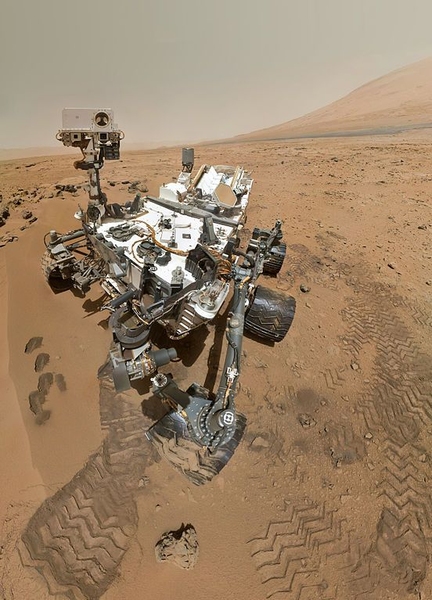
NASA Curiosity rover chief scientist John Grotzinger will present a public lecture at MIT on Friday, May 9, centered on NASA’s $2.5 billion Curiosity rover mission to Mars.
The Curiosity rover mission, which riveted the country with its daredevil landing in 2012, has been feeding scientists tantalizing new data ever since.
The SUV-sized rover — with its laboratory of spectrometers, lasers, X-ray diffractometer, radiation detector, neutron generator, 17 cameras, and own weather station — has pushed deep into the environmental records of early Martian history. Data from Curiosity show that sulfur, nitrogen, hydrogen, oxygen, phosphorus and carbon — some key chemical ingredients for life — were available to microbes, had they ever originated on Mars. These primitive organisms could have fed on the chemical energy stored in rocks and minerals, just like a flashlight bulb lights up by using the chemicals stored in a dry cell battery. Some microbes on Earth survive by consuming exactly this type of energy source. They eat rocks. Might the same have occurred on ancient Mars?
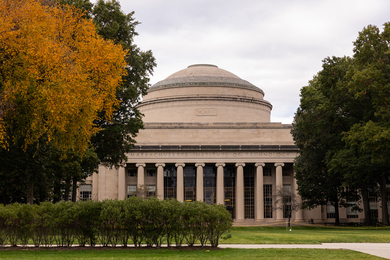
These topics and more will be discussed at the lecture, which will begin at 4 p.m. in the Stata Center Lecture Hall (Building 32-123) and be followed by a reception in Building 54-923. For more information, visit http://eapsweb.mit.edu/events/2014/brace-lecture.