Four MIT neuroscientists were among those invited to the White House on Tuesday, April 2, when President Barack Obama announced a new initiative to understand the human brain.
Professors Ed Boyden, Emery Brown, Robert Desimone and Sebastian Seung were among a group of leading researchers who joined Obama for the announcement, along with Francis Collins, director of the National Institutes of Health, and representatives of federal and private funders of neuroscience research.
In unveiling the BRAIN (Brain Research through Advancing Innovative Neurotechnologies) Initiative, Obama highlighted brain research as one of his administration’s “grand challenges” — ambitious yet achievable goals that demand new innovations and breakthroughs in science and technology.
A key goal of the BRAIN Initiative will be to accelerate the development of new technologies to visualize brain activity and to understand how this activity is linked to behavior and to brain disorders.
“There is this enormous mystery waiting to be unlocked,” Obama said, “and the BRAIN Initiative will change that by giving scientists the tools they need to get a dynamic picture of the brain in action and better understand how we think and how we learn and how we remember. And that knowledge could be — will be — transformative.”
To jump-start the initiative, the NIH, the Defense Advanced Research Projects Agency, and the National Science Foundation will invest some $100 million in research support beginning in the next fiscal year. Planning will be overseen by a working group co-chaired by Cornelia Bargmann PhD ’87, now at Rockefeller University, and William Newsome of Stanford University. Brown, an MIT professor of computational neuroscience and of health sciences and technology, will serve as a member of the working group.
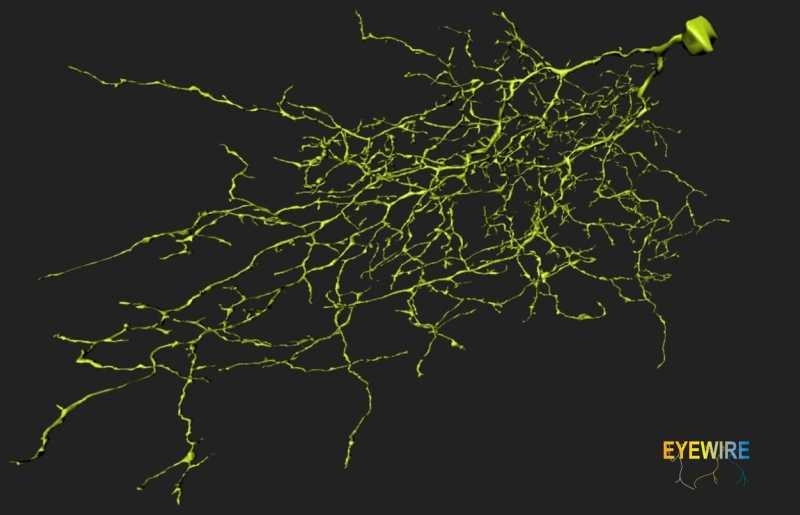
Boyden, the Benesse Career Development Associate Professor of Research in Engineering, has pioneered the development of new technologies for studying brain activity. Desimone, the Doris and Don Berkey Professor of Neuroscience, is director of MIT’s McGovern Institute for Brain Research, which conducts research in many areas relevant to the new initiative. Seung, a professor of computational neuroscience and physics, is a leader in the field of “connectomics,” the effort to describe the wiring diagram of the brain.
Professors Ed Boyden, Emery Brown, Robert Desimone and Sebastian Seung were among a group of leading researchers who joined Obama for the announcement, along with Francis Collins, director of the National Institutes of Health, and representatives of federal and private funders of neuroscience research.
In unveiling the BRAIN (Brain Research through Advancing Innovative Neurotechnologies) Initiative, Obama highlighted brain research as one of his administration’s “grand challenges” — ambitious yet achievable goals that demand new innovations and breakthroughs in science and technology.
A key goal of the BRAIN Initiative will be to accelerate the development of new technologies to visualize brain activity and to understand how this activity is linked to behavior and to brain disorders.
“There is this enormous mystery waiting to be unlocked,” Obama said, “and the BRAIN Initiative will change that by giving scientists the tools they need to get a dynamic picture of the brain in action and better understand how we think and how we learn and how we remember. And that knowledge could be — will be — transformative.”
To jump-start the initiative, the NIH, the Defense Advanced Research Projects Agency, and the National Science Foundation will invest some $100 million in research support beginning in the next fiscal year. Planning will be overseen by a working group co-chaired by Cornelia Bargmann PhD ’87, now at Rockefeller University, and William Newsome of Stanford University. Brown, an MIT professor of computational neuroscience and of health sciences and technology, will serve as a member of the working group.
Boyden, the Benesse Career Development Associate Professor of Research in Engineering, has pioneered the development of new technologies for studying brain activity. Desimone, the Doris and Don Berkey Professor of Neuroscience, is director of MIT’s McGovern Institute for Brain Research, which conducts research in many areas relevant to the new initiative. Seung, a professor of computational neuroscience and physics, is a leader in the field of “connectomics,” the effort to describe the wiring diagram of the brain.