Video: Lucy Lindsey and Melanie Gonick
In 1973, Media Lab associate professor Joe Paradiso was an undergraduate at Tufts University, and didn’t know anyone who had built an analog music synthesizer, or “synth,” from scratch.
It was a time, he says, when information and parts for do-it-yourself projects were scarce, and digital synthesizer production was on the rise. But, he decided to tackle the project — without any formal training — and sought out advice from local college professors, including his now-colleague in the Media Lab, Barry Vercoe. Paradiso gathered information from manufacturers’ data sheets and hobbyist magazines he found in public libraries. He taught himself basic electronics, scrounged for parts from surplus stores and spent a decade and a half building modules and hacking consumer keyboards to create the synth, which he completed in the 1980s.
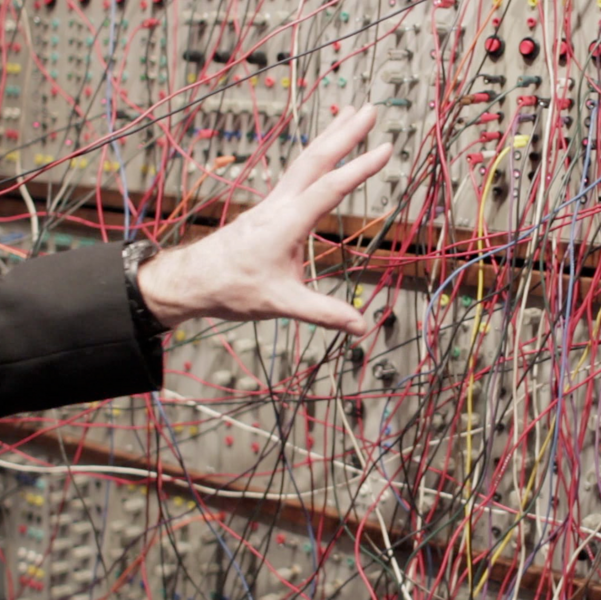
That synthesizer, probably the world’s largest with more than 125 modules, is now on display in the MIT Museum.
Every few weeks, Paradiso changes the complex configurations of wires connecting the synthesizer’s modules, called "patches,” to create a new sonic environment. The synthesizer streams live online 24 hours a day at http://synth.media.mit.edu; starting this week, visitors to the synthesizer’s website can even change the patch parameters online.
Learn more about Paradiso’s synthesizer