On Tuesday, President Obama hosted the second White House Science Fair celebrating the student winners of a broad range of science, technology, engineering and math (STEM) competitions from across the country. The president announced key steps that his administration and its partners are taking to help more students excel in math and science, and earn degrees in these subjects.
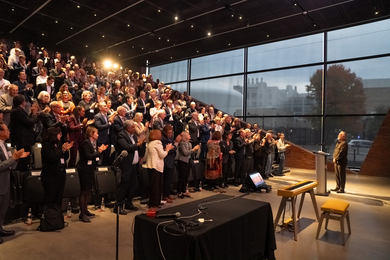
At the fair, the President viewed exhibits of student work, ranging from breakthrough research to new inventions, followed by remarks to an audience of students, science educators and business leaders on the importance of STEM education to the country’s economic future.
The second White House Science Fair celebrated more than 100 students from 45-plus states, representing more than 40 different competitions and organizations that work with students and inspire them to excel in STEM. More than 30 student teams will have the opportunity to exhibit their projects this year, almost twice as many as the first White House Science Fair.
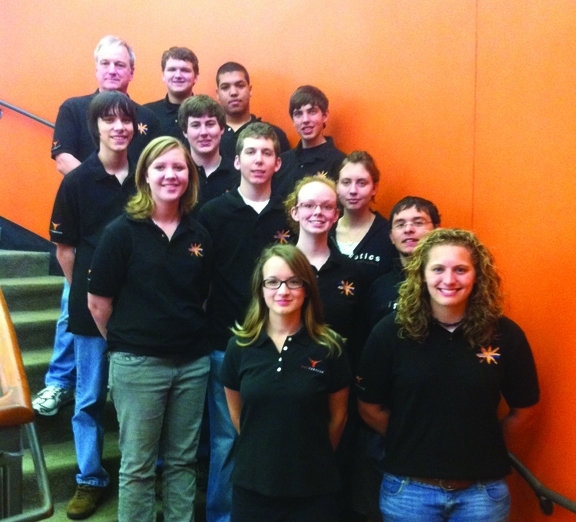
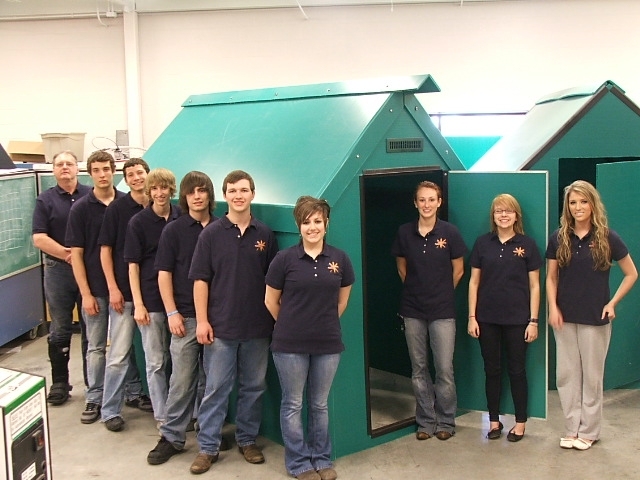
Two of the exhibiting student teams present will be Lemelson-MIT InvenTeams — the Pike Central High School InvenTeam of Petersburg, Ind., and Carlton J. Kell High School InvenTeam of Marietta, Ga. The Lemelson-MIT InvenTeam initiative inspires a new generation of inventors by engaging students in creative thinking, problem-solving and hands-on learning in science, technology, engineering and mathematics (STEM). Each selected team receives a grant of up to $10,000 to bring their inspirational invention ideas to life.
To read the full press release, please visit: http://web.mit.edu/invent/n-pressreleases/n-press-12WH.html
At the fair, the President viewed exhibits of student work, ranging from breakthrough research to new inventions, followed by remarks to an audience of students, science educators and business leaders on the importance of STEM education to the country’s economic future.
The second White House Science Fair celebrated more than 100 students from 45-plus states, representing more than 40 different competitions and organizations that work with students and inspire them to excel in STEM. More than 30 student teams will have the opportunity to exhibit their projects this year, almost twice as many as the first White House Science Fair.
Two of the exhibiting student teams present will be Lemelson-MIT InvenTeams — the Pike Central High School InvenTeam of Petersburg, Ind., and Carlton J. Kell High School InvenTeam of Marietta, Ga. The Lemelson-MIT InvenTeam initiative inspires a new generation of inventors by engaging students in creative thinking, problem-solving and hands-on learning in science, technology, engineering and mathematics (STEM). Each selected team receives a grant of up to $10,000 to bring their inspirational invention ideas to life.
To read the full press release, please visit: http://web.mit.edu/invent/n-pressreleases/n-press-12WH.html