Skip to content ↓

Video: Remembering astronaut, alum Ron McNair

On 25th anniversary of the Challenger Space Shuttle disaster, AeroAstro professor Jeffrey Hoffman remembers his colleague.


Video: Melanie Gonick; still images: NASA

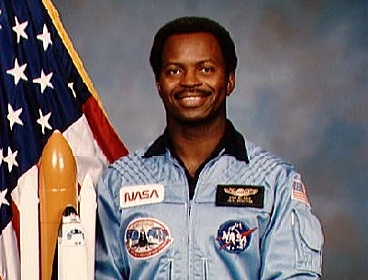
Twenty-five years ago today, on Jan. 28, 1986, the Space Shuttle Challenger broke apart 73 seconds into its flight, killing the seven crew members on board — including Ronald McNair PhD ’77.

In this video — filmed in the lobby of the Ronald McNair Building — Jeffrey Hoffman, Professor of the Practice in the Department of Aeronautics and Astronautics and a former shuttle astronaut, reflects on McNair's life and legacy.
"My wish is that we would allow this planet to be the beautiful oasis that she is, and allow ourselves to live more in the peace that she generates." –Ronald McNair

Press Mentions

The Daily Beast

Daily Beast reporter Meredith Bagby spotlights the life of Ron McNair PhD ’76 and his legacy as one of NASA’s first black astronauts. “Astronaut, saxophonist, and karate black belt Ron McNair overcame an impoverished childhood in segregated Lake City, South Carolina to earn a Ph.D. in physics from MIT and become one of NASA’s first Black astronauts,” writes Bagby. “Although Ron’s path to NASA was nearly derailed because of systematic racism and inequality, he found inspiration in the Black leaders around him and persevered.”

Nature

Ronald McNair PhD ’76 was a part of NASA’s class of 1978, which was the first group of astronauts to include women, people of color, and scientists, reports Alexandra Witze for Nature. The class of 1978 “was a time of huge change for NASA,” writes Witze. “It was time for a new type of astronaut for a new type of spaceship.”

Related Links

Related Topics

More MIT News

Globular blue and white orbs "examining" single-stranded RNA products and marking them with green checks or red x's

Why are some bacterial genes high in purines?

In certain species of bacteria, the answer lies in shielding RNA transcripts from a quality-control factor called Rho. Understanding the requirements for expressible sequences is critical for expression engineering of therapeutic agents.

Read full story

Rich Nielsen, Volha Charnysh, Kevin Dorst, and Emily Richmond Pollock seated at a table, talking

Building a scholarly community

The SHASS Faculty Fellows Program, administered by the MIT Human Insight Collaborative, is fostering new research projects and creating space for supportive and interdisciplinary discussion.

Read full story