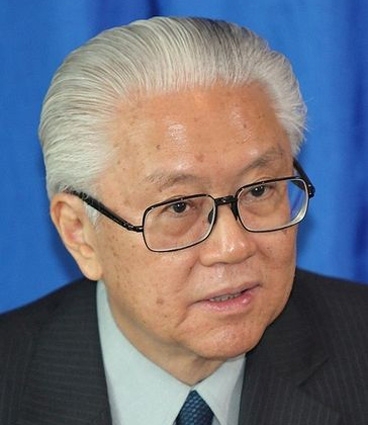
Tony Keng Yam Tan SM ’64, a member of the MIT Corporation since 2009, was sworn in Sept. 1 as Singapore’s seventh president.
Tan, 71, was Singapore’s deputy prime minister from 1995 to 2005, serving concurrently as minister for defense from 1995 to 2003 and as minister for security and defense from 2003 to 2005. Over the course of a political career spanning more than three decades, he has also served as Singapore’s minister for education and minister for finance.
More recently, Tan was executive director and deputy chairman of the Government of Singapore Investment Corporation and chairman of Singapore Press Holdings Limited. Before that, he led Singapore’s National Research Foundation and was deputy chairman of the nation’s Research, Innovation and Enterprise Council.
After receiving his undergraduate degree in physics from the University of Singapore in 1962, Tan earned his SM in operations research at MIT. In 1967, he completed a PhD in applied mathematics at the University of Adelaide in Australia.
Following the completion of his PhD, Tan was a lecturer in mathematics at the National University of Singapore until 1969, when he joined the Overseas-Chinese Banking Corporation (OCBC), eventually becoming its general manager. He left OCBC in 1979 when he was elected to the Singaporean Parliament, returning to the firm as chairman and CEO from 1992 to 1995.
Tan, 71, was Singapore’s deputy prime minister from 1995 to 2005, serving concurrently as minister for defense from 1995 to 2003 and as minister for security and defense from 2003 to 2005. Over the course of a political career spanning more than three decades, he has also served as Singapore’s minister for education and minister for finance.
More recently, Tan was executive director and deputy chairman of the Government of Singapore Investment Corporation and chairman of Singapore Press Holdings Limited. Before that, he led Singapore’s National Research Foundation and was deputy chairman of the nation’s Research, Innovation and Enterprise Council.
After receiving his undergraduate degree in physics from the University of Singapore in 1962, Tan earned his SM in operations research at MIT. In 1967, he completed a PhD in applied mathematics at the University of Adelaide in Australia.
Following the completion of his PhD, Tan was a lecturer in mathematics at the National University of Singapore until 1969, when he joined the Overseas-Chinese Banking Corporation (OCBC), eventually becoming its general manager. He left OCBC in 1979 when he was elected to the Singaporean Parliament, returning to the firm as chairman and CEO from 1992 to 1995.