Four technologies developed at MIT Lincoln Laboratory were named 2011 recipients of R&D 100 Awards. Given annually by R&D Magazine, an international journal for research scientists and engineers, these awards recognize the 100 most technologically significant innovations introduced during the previous year.
Recipients of R&D 100 Awards are chosen from hundreds of nominations by an independent panel of evaluators and the editors of R&D Magazine. Winners represent a broad range of technologies developed by industrial enterprises, government laboratories and university research facilities.
The laboratory's 2011 award winners are
Recipients of R&D 100 Awards are chosen from hundreds of nominations by an independent panel of evaluators and the editors of R&D Magazine. Winners represent a broad range of technologies developed by industrial enterprises, government laboratories and university research facilities.
The laboratory's 2011 award winners are
- Airborne Ladar Imaging Research Testbed — an airborne laser radar that rapidly collects high-resolution three-dimensional imagery of wide-area terrains
- Multifunction Phased Array Radar Panel — panels of phased arrays exploit dual polarization and digital beamforming to provide efficient radar detection and tracking of aircraft and weather targets
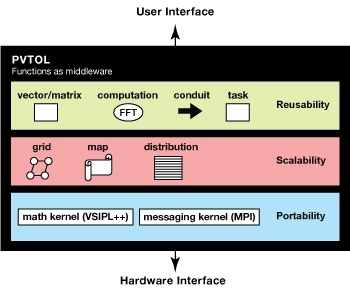
- Parallel Vector Tile Optimizing Library — a real-time signal processing library that enables cross-platform portability of programs without sacrificing high performance
- Pathogen Analyzer for Threatening Environmental Releases Bioaerosol Identification System — a highly sensitive sensor that uses genetically modified white blood cells to rapidly detect and identify pathogens and toxins