Ddegeya, Uganda, a community of about 1,000 people spread across 5 square kilometers, relies on a single pond and one working well for water. The people there have no electricity and limited access to health care, because the local clinic faces the same constraints as the community.
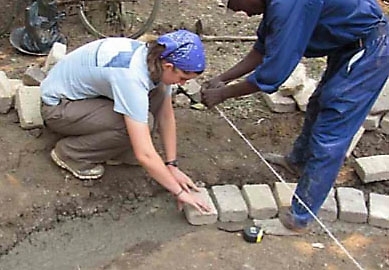
The Engineers Without Borders (EWB) MIT chapter has worked with the Engeye Health Clinic in Ddegeya since 2008, and in summer 2010, EWB MIT made its third trip to Ddegeya. This trip was the first large-scale implementation of the EWB plans and it was highly successful in helping the community make small steps toward improving access to water and power. But much remains to be done.
At MIT, Engineers Without Borders works in two teams to address the main problems of the community: energy and water.
Read a news story about this project and look for the EWB exhibit at MIT's Open House on Saturday, April 30.
The Engineers Without Borders (EWB) MIT chapter has worked with the Engeye Health Clinic in Ddegeya since 2008, and in summer 2010, EWB MIT made its third trip to Ddegeya. This trip was the first large-scale implementation of the EWB plans and it was highly successful in helping the community make small steps toward improving access to water and power. But much remains to be done.
At MIT, Engineers Without Borders works in two teams to address the main problems of the community: energy and water.
Read a news story about this project and look for the EWB exhibit at MIT's Open House on Saturday, April 30.