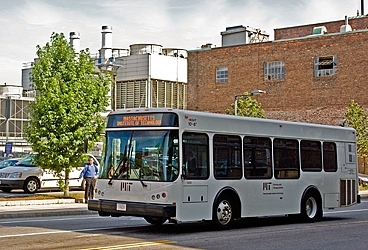
The campus shuttle service will undergo several changes beginning Monday, Aug. 9, that will increase shuttle frequency and number of passenger seats at no additional cost to MIT.
The changes are the result of recommendations from Department of Civil and Environmental Engineering graduate student research and MIT Parking and Transportation data.
Beginning on Aug. 9, the Tech Shuttle will see a schedule and route change. Modifications include:
Employees from MIT Parking and Transportation and EZRide will be at major stops during the week of Aug. 9 to assist riders through the change.
The changes are the result of recommendations from Department of Civil and Environmental Engineering graduate student research and MIT Parking and Transportation data.
Beginning on Aug. 9, the Tech Shuttle will see a schedule and route change. Modifications include:
- An earlier start time: The first shuttle will depart Kendall Square at 6:15 a.m. to enable more employees to use public transportation and to take advantage of Economy Parking Lots in the West campus;
- Route modification: The shuttle will maintain the 20-minute loop and result in increased on-time performance;
- The 84 Massachusetts Avenue stop will be relocated around the corner to Amherst Street at W11;
- The Media Lab stop will be serviced by the EZRide shuttle;
- Service to Building 42 will be discontinued. Please use the Stata stop.
Employees from MIT Parking and Transportation and EZRide will be at major stops during the week of Aug. 9 to assist riders through the change.