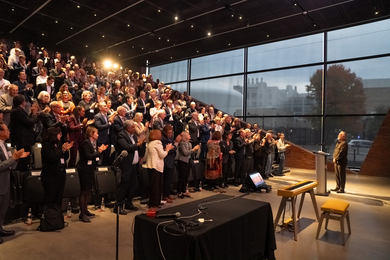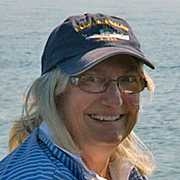
Judith Pederson, PhD, advisory leader and regional project coordinator at the MIT Sea Grant College Program, received a 2010 Visionary Award from the Gulf of Maine Council on the Marine Environment in a ceremony in Portland, Maine on Dec. 7. The Gulf of Maine Council on the Marine Environment was established in 1989 by the governments of Nova Scotia, New Brunswick, Maine, New Hampshire and Massachusetts to foster cooperative actions within the Gulf watershed. Its mission is to maintain and enhance environmental quality in the Gulf of Maine to allow for sustainable resource use by existing and future generations.
Each year, the Gulf of Maine Council gives Visionary Awards to two individuals, businesses or organizations within each state and province bordering the Gulf. The awards recognize innovation, creativity and commitment to protecting the marine environment. The award citation to Pederson emphasizes her success in “working to ensure that the best science has been incorporated” into environmental policies which impact the Gulf of Maine.
Pederson coordinates the Gulf of Maine Regional Ocean Science Initiative and compiled and edited the 2009 Gulf of Maine Strategic Ocean Science Plan. An international expert on marine invasive species, her research focuses on the “biopollution” of marine bioinvasions in near-shore and offshore areas of the Gulf of Maine and Georges Bank. In addition to her research over the past 20 years, Pederson has further contributed to water-quality monitoring, clean-up efforts in Boston Harbor and other areas of Massachusetts, and the disposal of contaminated marine sediments. Prior to joining MIT Sea Grant in 1995, Pederson worked as a coastal ecologist at the Massachusetts Office of Coastal Zone Management.
Each year, the Gulf of Maine Council gives Visionary Awards to two individuals, businesses or organizations within each state and province bordering the Gulf. The awards recognize innovation, creativity and commitment to protecting the marine environment. The award citation to Pederson emphasizes her success in “working to ensure that the best science has been incorporated” into environmental policies which impact the Gulf of Maine.
Pederson coordinates the Gulf of Maine Regional Ocean Science Initiative and compiled and edited the 2009 Gulf of Maine Strategic Ocean Science Plan. An international expert on marine invasive species, her research focuses on the “biopollution” of marine bioinvasions in near-shore and offshore areas of the Gulf of Maine and Georges Bank. In addition to her research over the past 20 years, Pederson has further contributed to water-quality monitoring, clean-up efforts in Boston Harbor and other areas of Massachusetts, and the disposal of contaminated marine sediments. Prior to joining MIT Sea Grant in 1995, Pederson worked as a coastal ecologist at the Massachusetts Office of Coastal Zone Management.