When engineers develop a complex new system, they typically compensate for a lack of field experience by overbuilding — extra material and heavy construction help create margin for error. This trend, for example, is seen in everyday life with airplanes, cars and motorboats; over time, with more data and better computer-aided simulation and design, all have become lighter and more efficient, with better performance and improved safety.
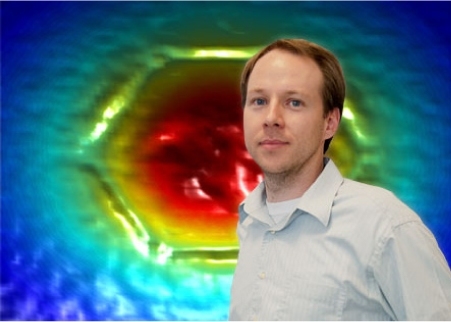
Several Department of Nuclear Science and Engineering teams are bringing this type of evolution to nuclear reactors by developing more-accurate approaches to modeling of reactor behavior. A group led by Benoit Forget, the Norman K. Rasmussen Assistant Professor of Nuclear Science and Engineering, is working at the subatomic level, developing advanced mathematical analyses and computation tools that provide a clearer picture of the complex physics of reactor cores.
Read the full feature
Several Department of Nuclear Science and Engineering teams are bringing this type of evolution to nuclear reactors by developing more-accurate approaches to modeling of reactor behavior. A group led by Benoit Forget, the Norman K. Rasmussen Assistant Professor of Nuclear Science and Engineering, is working at the subatomic level, developing advanced mathematical analyses and computation tools that provide a clearer picture of the complex physics of reactor cores.
Read the full feature