Ever found yourself disoriented in Boston because there were no signs to tell you where you are? Or worse, signs that tell you the wrong thing?
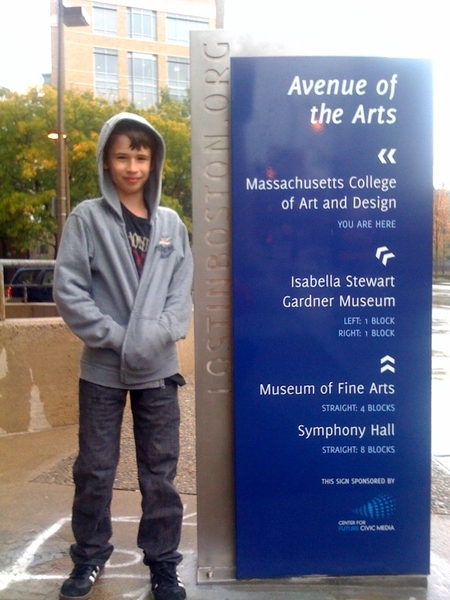
The solution may be "Lost in Boston" signs, new easy-to-follow signage for Boston's legendary terribly marked intersections. A collaboration between MIT's Center for Future Civic Media and the Urban Arts Institute at Massachusetts College of Art and Design, each sign is sponsored privately and housed on private property, but they are just as visible — or even more visible — than city signage.
More importantly, says project creator Rick Borovoy of the Center for Future Civic Media, neighborhood groups determine the content of each sign, giving them direct say in what parts of their neighborhood they feel is most historic, vital, or overlooked.
The first sign was just installed on the grounds of MassArt, and a formal unveiling is planned for later this month.
The solution may be "Lost in Boston" signs, new easy-to-follow signage for Boston's legendary terribly marked intersections. A collaboration between MIT's Center for Future Civic Media and the Urban Arts Institute at Massachusetts College of Art and Design, each sign is sponsored privately and housed on private property, but they are just as visible — or even more visible — than city signage.
More importantly, says project creator Rick Borovoy of the Center for Future Civic Media, neighborhood groups determine the content of each sign, giving them direct say in what parts of their neighborhood they feel is most historic, vital, or overlooked.
The first sign was just installed on the grounds of MassArt, and a formal unveiling is planned for later this month.