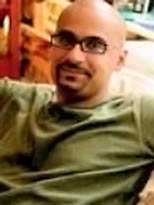
MIT Associate Professor Junot Díaz will read from his critically acclaimed new novel, "The Brief Wondrous Life of Oscar Wao," during an appearance at 6 p.m. today (Sept. 12) at the Brattle Theatre in Cambridge.
Time magazine called Díaz's book "astoundingly great," while book critic Michiko Kakutani of The New York Times described "Oscar Wao" as both a comic portrait of a lovesick second-generation Dominican geek and a harrowing meditation on public and private history.
"It is Mr. Díaz's achievement in this galvanic novel that he's fashioned both a big picture window that opens out on the sorrows of Dominican history, and a small, intimate window that reveals one family's life and loves. In doing so, he's written a book that decisively establishes him as one of contemporary fiction's most distinctive and irresistible new voices," she wrote. The high praise for "Oscar Wao" was echoed in Esquire, The Village Voice, and Entertainment Weekly.
Riverhead Press, publisher of "Oscar Wao," is even sending Díaz on the now-rare book tour. Following his reading at the Brattle, he heads out on a 16-city trip that includes Miami, St. Louis, Los Angeles, Dallas, Seattle and New York.
Díaz was born in the Dominican Republic and moved to New Jersey with his parents when he was 6. He received the BA from Rutgers and the MFA from Cornell. He came to MIT in 2003 and teaches in the Program in Writing and Humanistic Studies.
Tickets to the reading are $5. For more information, call (617) 661-1515.
A version of this article appeared in MIT Tech Talk on September 12, 2007 (download PDF).