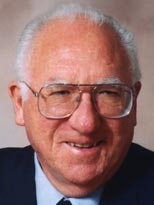
Gerald N. Wogan, the Underwood-Prescott Professor of Toxicology emeritus and professor of chemistry emeritus, has been awarded the 2005 Charles S. Mott Prize, one of three awards given annually by the General Motors Cancer Research Foundation. The $250,000 prize recognizes the most outstanding recent contribution to the cause or prevention of cancer.
Wogan was cited for his studies related to aflatoxin, a common food contaminant, which is produced by certain fungi of the Aspergillus genus. It is now widely accepted that aflatoxin in association with hepatitis viruses causes liver cancer in humans.
Liver cancer kills 500,000 people a year and is one of the five leading causes of cancer deaths worldwide. It is especially common in third-world countries, particularly in Asia and Africa, where aflatoxin contamination of food supplies, such as corn and peanuts, persists.
Wogan has had a distinguished career in the study of the toxicology and chemistry of aflatoxins. In the 1960s, his research group successfully purified aflatoxin B1, B2 and G and determined their structure-activity relationship and relevant toxicities. He hypothesized that the high incidence of liver cancer in the developing world could be the result of exposure to aflatoxins.
Wogan's work on aflatoxin and liver cancer is widely cited as a paradigm for molecular toxicology and epidemiology. Collectively, his studies have had a direct impact on world public health. Food contamination in certain parts of Asia and Africa is especially difficult to control, and Wogan has been keenly interested in developing methods of risk identification and remediation.
Wogan received his bachelor of science degree in biology from Juniata College in Huntington, Pa., in 1951. He later earned his master of science and Ph.D. degree in physiology from the University of Illinois at Urbana-Champaign. In 1961 he accepted a position at the Massachusetts Institute of Technology, and he has been here ever since.
A version of this article appeared in MIT Tech Talk on June 8, 2005 (download PDF).