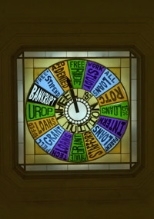
Hackers broke two new glass panes on Monday while creating a colorful "Wheel of Tuition" depiction with cellophane panels in the restored Lobby 7 skylight. They also destroyed at least one lock set and door hardware while gaining access to the dome through a mechanical space.
"They broke the unwritten law of hacks--do no damage," said Assistant Safety Officer David Barber, who has been dismantling hacks since 1993. "There are hackers and hacker wanna-bes. These people were wanna-bes. They were much too nonchalant about the destruction of property to be real hackers."
To remove the spinning wheel, the Hack Evaluation and Removal Team carefully lifted the frosted interior protective panes with suction cups to gain access to the cellophane and black tape on the clear glass panels facing the lobby. Two of these protective panels were shattered by the hackers.
To prevent future damage, Barber said an alarm system would be installed to protect the area from intrusions.
"The Dean's Office understands the culture of hacking, but we continue to be concerned about issues related to safety," Senior Associate Dean for Students Robert M. Randolph said.
A version of this article appeared in MIT Tech Talk on February 6, 2002.