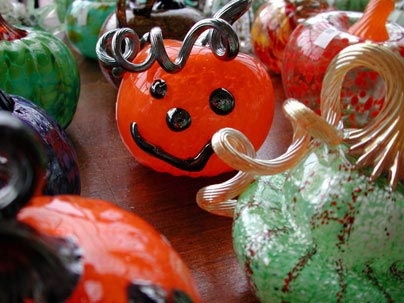
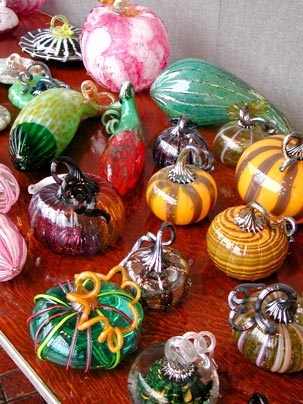
It's a bumper crop, but if you bump these veggies too hard, they'll break.
The MIT Glass Lab's fifth annual Great Glass Pumpkin Patch will sprout Sept. 23-24 on Kresge Oval with more than 1,000 unique, hand-blown glass pumpkins and gourds.
The Great Glass Pumpkin Patch begins with a preview reception (no sales) on Friday, Sept. 23, from 5 to 8 p.m. On Saturday, Sept. 24, between 10 a.m. and 5 p.m., visitors of all ages are invited to stroll through the "pumpkin patch" and pick favorites to purchase. In case of rain, the sale will be held on Sunday, Sept. 25.
The glass pumpkins were created by students and instructors in MIT's Glass Lab, where members of the MIT community learn and practice the art of glass blowing. Proceeds from the event benefit the lab, an art program connected with MIT's Department of Materials Science and Engineering. Pumpkin-making is overseen by glass artist Peter Houk, currently in residence at the MIT Glass Lab.
Blowing pumpkins teaches basic glass-blowing skills and the importance of teamwork, Houk says. But it's also a lot of fun, with food and music helping to create a party atmosphere. "Everyone gets a kick when the whole team's working well," says Houk. "It's fun to see another pumpkin appear every five minutes or so."
For more information, call x3-5309.
Glass pumpkins now in season
1,000: Pumpkins to be made for this year's sale
5: Hours it took for pumpkins to sell out last year
12: Pumpkins broken last year
$25: Cost of least expensive pumpkin
$500: Cost of most expensive pumpkin
A version of this article appeared in MIT Tech Talk on September 21, 2005 (download PDF).