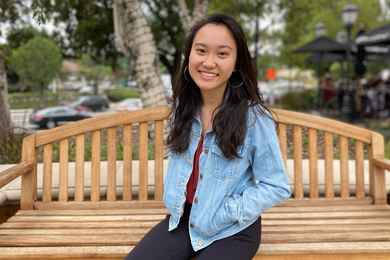
Aspiring physician explores the many levels of human health
During her time at MIT, senior Ayesha Ng’s interests have expanded from cellular biology to the social systems that shape public health.
During her time at MIT, senior Ayesha Ng’s interests have expanded from cellular biology to the social systems that shape public health.
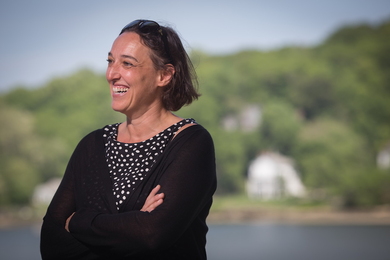
Professor and mentor for more than 20 years at MIT redefined scientists’ understanding of the biology of cell division and proliferation.
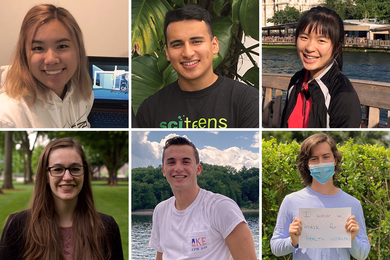
Despite the disruption caused by the pandemic, MIT students have carved out meaningful hands-on experiences.
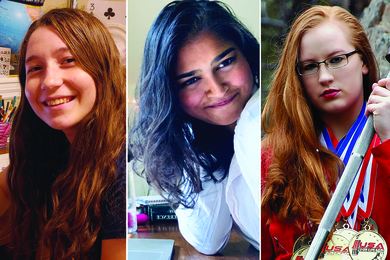
Far from MIT, nuclear science and engineering students take ownership of projects and explore new terrain.
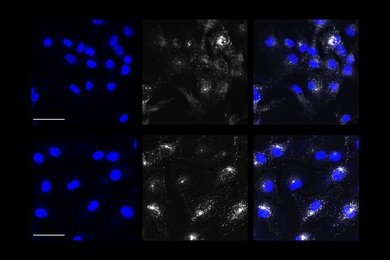
Astrocytes with the APOE4 gene variant show deficits of a key cellular function, but overexpressing the gene PICALM overcame the defect.
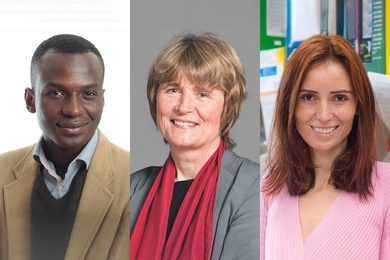
Prize recognizes contributions to biomedical research made by immigrant scientists.
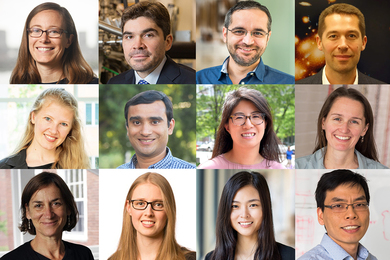
Those selected for these positions receive additional support to pursue their research and develop their careers.
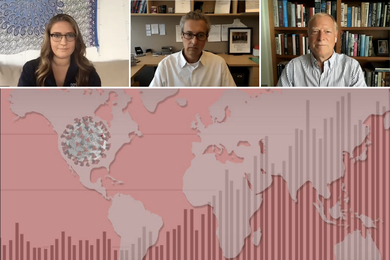
MIT course on the Covid-19 pandemic, available to the public online, brings together top experts to educate students on up-to-date science.
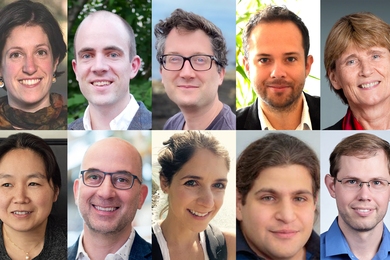
Joining the School of Science, 10 faculty members expand the departments of Biology; Chemistry; Earth, Atmospheric and Planetary Sciences; Mathematics; and Physics.
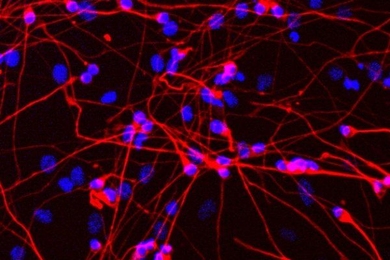
Disruption of condensates in the neurodevelopmental disorder provides insights into how cells compartmentalize chromosomes, as well as new potential therapies.
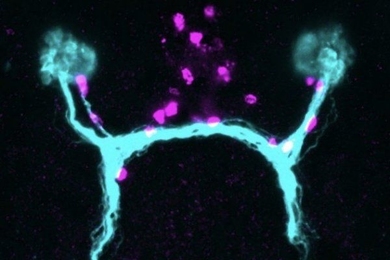
Peter Reddien's lab at the Whitehead Institute takes a step forward in understanding how neural circuits could be regenerated in adults.
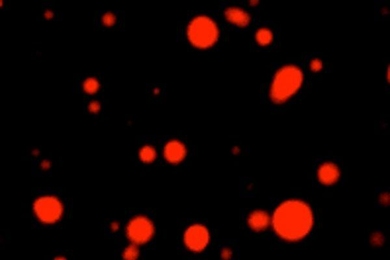
Certain cancer therapeutics concentrate within cells — a finding that could change the way scientists think about drug design.
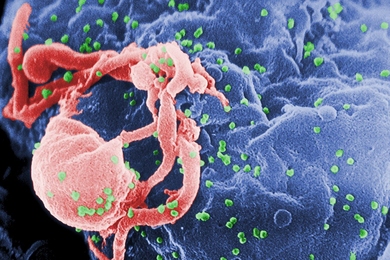
Differently shaped RNA molecules allow HIV to express different genes from the same RNA sequence.
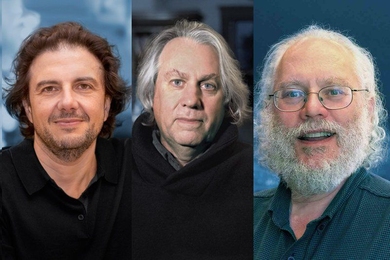
Laureates recognized for contributions to climate change, biomedicine, and quantum cryptography.