A new way to make steel could reduce America’s reliance on imports
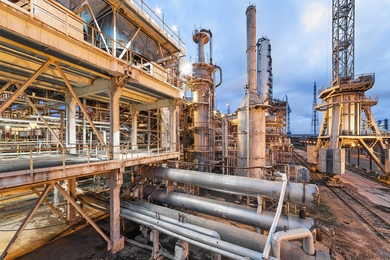
Hertha Metals, founded by Laureen Meroueh SM ’18, PhD ’20, uses natural gas and electricity to produce steel and high-purity iron for magnets.
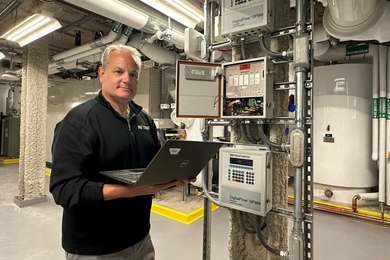
AtmosZero, co-founded by Addison Stark SM ’10, PhD ’14, developed a modular heat pump to electrify the centuries-old steam boiler.
MIT Energy Initiative researchers calculated the economic and environmental impact of future ammonia energy production and trade pathways.
Images from geostationary satellites alone aren’t enough to help planes avoid contrail-prone regions, MIT researchers report.
Global Change Outlook report for 2025 shows how accelerated action can reduce climate risks and improve sustainability outcomes, while highlighting potential geopolitical hurdles.
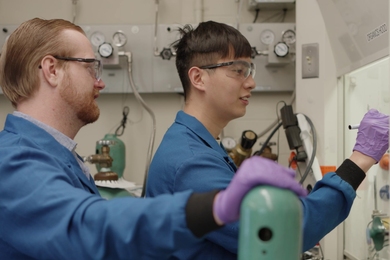
Chemical engineers have found a simple way to make capturing carbon emissions from industrial plants more energy-efficient.
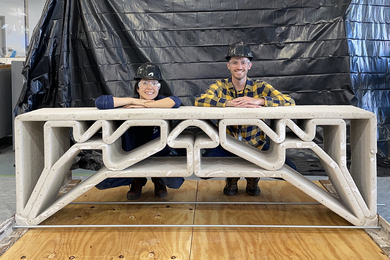
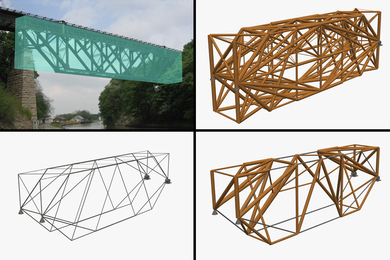
The project was designed and built with novel “bio-composite” materials developed by the student team.
Cutting air travel and purchasing renewable energy can lead to different effects on overall air quality, even while achieving the same CO2 reduction, new research shows.
Macro, a modeling tool developed by the MIT Energy Initiative, enables energy-system planners to explore options for developing infrastructure to support decarbonized, reliable, and low-cost power grids.
Wedge-shaped vortex generators reduce drag in ship hulls, which could advance decarbonization for the shipping industry.
Four MIT alumni say their startup, Amogy, has the technology to help decarbonize maritime shipping, power generation, manufacturing, and more.
Mantel, founded by MIT alumni, developed a system that captures CO2 from factories and power plants while delivering steam to customers.
MIT faculty and MITEI member company experts address power demand from data centers.
First-of-its-kind handbook serves as a guide for design safety for civilian nuclear ships.
In “Carbon Removal,” Howard Herzog and Niall MacDowell assess proposed methods of removing carbon already in the atmosphere as a means of mitigating climate change.