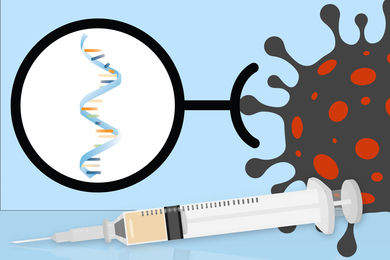
Explained: Why RNA vaccines for Covid-19 raced to the front of the pack
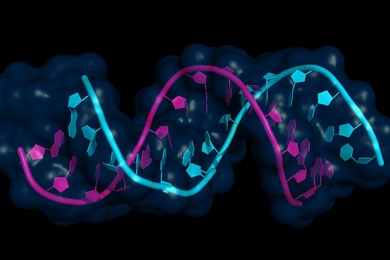
Many years of research have enabled scientists to quickly synthesize RNA vaccines and deliver them inside cells.
Many years of research have enabled scientists to quickly synthesize RNA vaccines and deliver them inside cells.

Biological engineer discusses condensing the time taken to develop therapeutics down from many years to a matter of months.
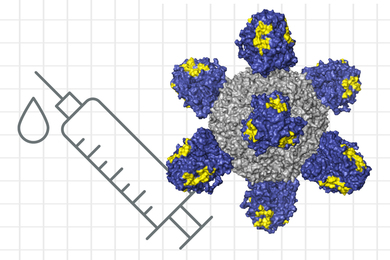
With computer models and lab experiments, researchers are working on a strategy for vaccines that could protect against any influenza virus.

At MIT Forefront, panelists discuss health care and work during a pandemic — and the role for business where government falls short.
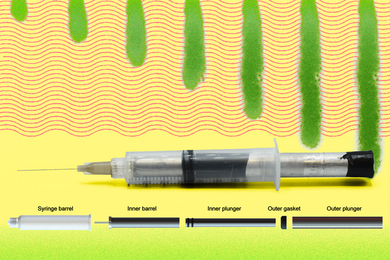
Researchers have designed a simple, low-cost device for subcutaneous injection of viscous formulations.

Sequential immunization might be safer and more effective than the existing tetravalent vaccine.

The experimental drug has shown promise in early-stage clinical trials conducted in Singapore.
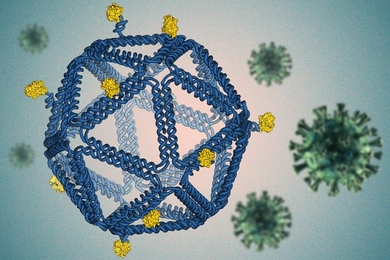
In lab tests, virus-like DNA structures coated with viral proteins provoke a strong immune response in human B cells.
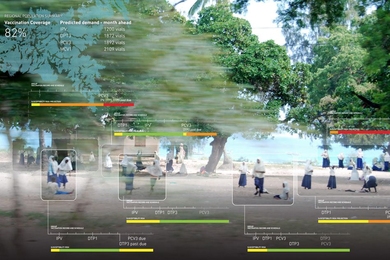
The startup macro-eyes uses artificial intelligence to improve vaccine delivery and patient scheduling.
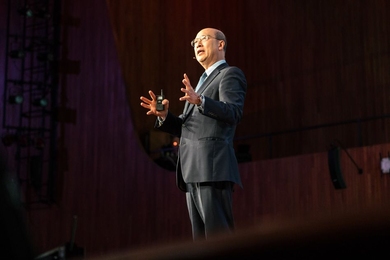
Study: Vaccines find more success in development than any other kind of drug, but have been relatively neglected in recent decades.
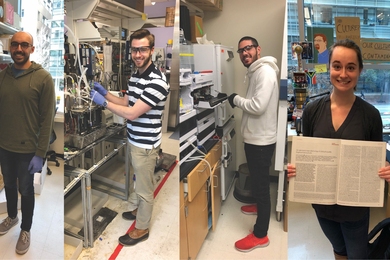
Manufacturability is key to producing a widely available, affordable vaccine.

A variety of companies with MIT ties are working to address aspects of the Covid-19 pandemic.

Specialized invisible dye, delivered along with a vaccine, could enable “on-patient” storage of vaccination history to save lives in regions where paper or digital records aren’t available.
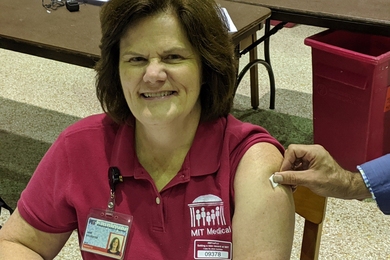
During the community flu clinic on Oct. 3, at least 9,378 people on campus had received vaccinations — an average of one shot every 3.8 seconds.
Vaccines packaged in novel nanoparticles could offer a new way to fight cancer and infectious diseases.