
Could the precise architectural form of your residence influence how much you participate in politics?
A new study by MIT scholars finds this to be exactly the case — at least in Accra, Ghana, where many people live in semi-communal structures known as “compound houses,” often sharing kitchens, bathrooms, and common living-room spaces, while having private bedrooms.
The detailed study of homes in Ghana’s capital finds that residents of compound houses are more likely to vote, attend rallies, and take part in political campaigns, compared to people with more private forms of housing.
“The overarching pattern we find is that if you compare people who live in compound houses to residents of other housing types, like single-family homes or self-contained apartments, there is a pretty big difference in political actions,” says Noah Nathan, an MIT political scientist and co-author of a newly published paper detailing the study’s results. “People seem to vote more, and there are more other types of political behavior, like going to rallies, participating in campaigns, and contacting politicians.”
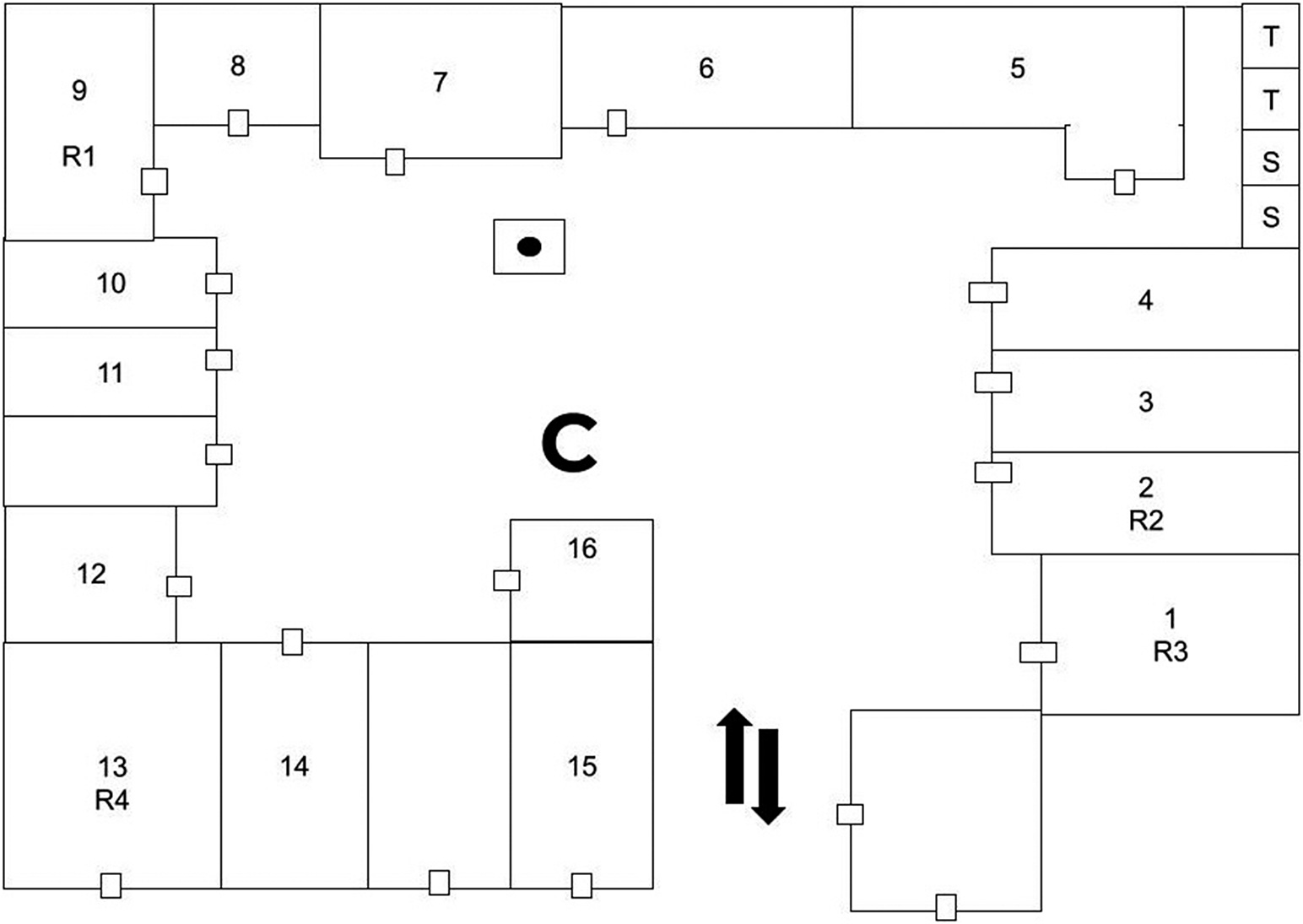
While those differences could stem from factors other than housing, the highly granular study suggests the architecture itself really matters. The researchers examined the specific floor plans of compound houses and found variations in people’s political information and social connections — key factors that existing studies show predict political activity — that map to differences in where people live within compound houses.
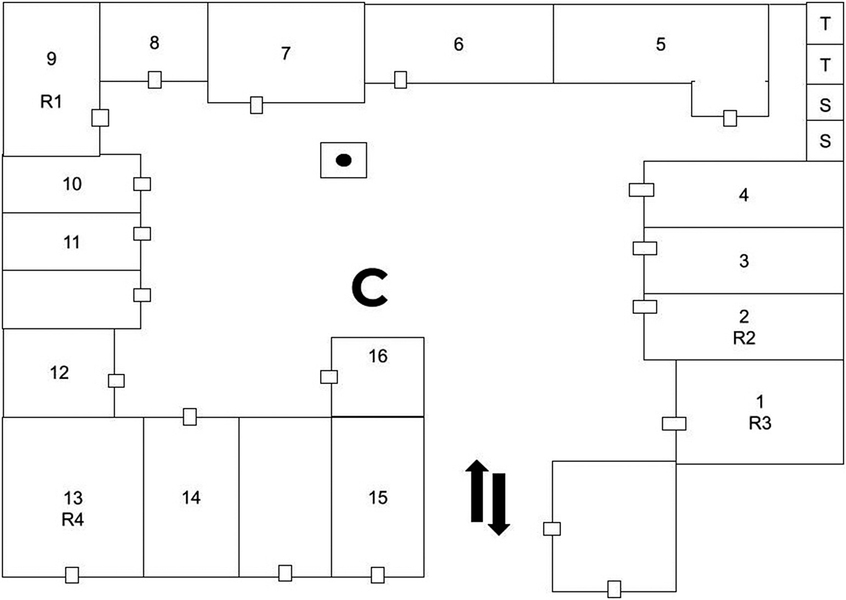
“We show that those kinds of social relationships and exchanges of political information seem to vary systematically with people’s individual locations within the layouts of the buildings they live in,” says Nathan, an associate professor in MIT’s Department of Political Science. “That’s consistent with architectural design leading you to have different levels of political participation.”
The open-access paper, “Vernacular Architecture and Grassroots Urban Politics: How Politics Is Embedded in Residential Design,” appears in the American Political Science Review. Nathan’s co-author is Paige Bollen PhD ’23, an assistant professor of political science at Ohio State University.
Compound effects
Compound houses are a common form of residence in Ghana, much of West Africa, and some other parts of the world. They tend to house lower-income people who construct them out of inexpensive local materials. Trying to understand their effects is part of taking seriously the idea that place, and space, influence how people live.
“Rather than just thinking of cities as big agglomerations of people, we should evaluate cities through their actual built forms and designs,” Nathan says. “Space affects politics because people interact with each other in space. It’s not just that people are near each other, but the designs force them to interact or talk in ways that affect how information is exchanged and how social networks form, and that can aggregate up into politics in terms of action and cooperation.”
To conduct the study, Nathan and Bollen used three forms of data to draw out the effects of compound houses on politics. Through pre-existing administrative and electoral data, they first show that polling stations in neighborhoods with a high proportion of compound houses have better electoral turnout than neighborhoods with fewer compound houses. And from existing national survey data, the researchers determined that residents of compound houses actively participate in politics more often.
The researchers then conducted an original research survey of 1,272 residents in 391 compound houses in 30 neighborhoods of Accra, combined with mapping that showed the layout of those compound houses and where the survey participants lived within each one. In this way, they showed the effects of compound houses more precisely: Living in parts of them with especially high exposure to other people actually increases the amount of social network ties people report, as well as the amount of political information they obtain.
Quantitatively, changes in the centrality of people’s locations within compound houses seem to make a bigger difference in political engagement than other fundamental non-housing factors, such as changes in employment or measures of socioeconomic status.
“We leverage that variation to show that even within compound houses, the people with more exposures to neighbors have different social network ties and different forms of information than neighbors who live in more private locations,” Nathan notes.
Encouraging participation
As the scholars discuss in the paper, the effects of architecture on civic involvement are hardly immutable, but likely depend very much on the type of political state in question.
“We think under different conditions, this kind of architecture could have different effects,” Nathan says. “If you live in an authoritarian regime with an active police state, inhabiting an architecture in which you’re constantly on display to your neighbors is probably going to have the exact opposite implications from what we find in the study.”
However, he adds, since Ghana has a generally healthy democracy and is not a repressive state, “In this context, where there are not such high costs to participating in politics, we think these effects are going to break in the direction of more political participation.”
The study itself is an outgrowth of long-running, overlapping research interests on the part of Nathan and Bollen. Nathan is currently developing a book project about urban form, architecture, and politics both in Ghana, where he has conducted research for many years, and in other cities across the African continent. Bollen conducted her PhD research at MIT on public spaces, interactions, and political dynamics in Ghana and South Africa; her advisor was MIT Professor Evan Lieberman.
Sociologists, management experts, architects, and planners have all studied the effects of building design on human behavior, but have often focused on issues such as workplace productivity. Some political scientists, including MIT Associate Professor Bernardo Zacka, have also highlighted the salience of architecture to politics. But few political scientists have undertaken quantitative empirical studies of the subject. If they do, Nathan thinks, the results might surprise some people.
“There’s a famous idea that cities can be anonymizing,” Nathan says. “I think that’s actually not true. When you go to urban Ghana, people know each other, and there is a great deal of social capital and social connections. And I think part of the reason is that many people live in architectures that are not anonymizing.”