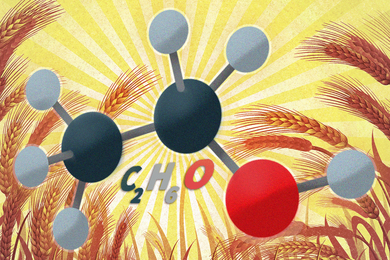
Engineered yeast could expand biofuels’ reach
By making the microbes more tolerant to toxic byproducts, researchers show they can use a wider range of feedstocks, beyond corn.
By making the microbes more tolerant to toxic byproducts, researchers show they can use a wider range of feedstocks, beyond corn.

Faculty from the departments of Physics and of Nuclear Science and Engineering faculty were selected for the Early Career Research Program.

Principal Research Scientist Abhay Ram circles back to his graduate school studies for a new initiative combining classical physics and quantum computing.

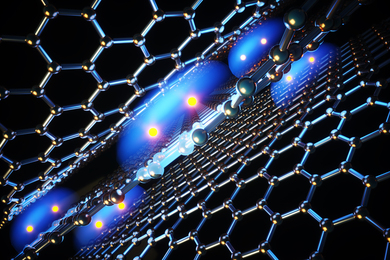
First experimental evidence of spin excitations in an atomically thin material helps answer 30-year-old questions, could lead to better medical diagnostics and more.

Model could help predictive virtual models become standard practice in engineering.

A new material made from carbon nanotubes can generate electricity by scavenging energy from its environment.

Atomically thin materials are a promising alternative to silicon-based transistors; now researchers can connect them more efficiently to other chip elements.

Fifth-year nuclear science and engineering graduate student Arunkumar Seshadri looks to develop materials and fuels that can better withstand the extreme conditions in nuclear reactors.
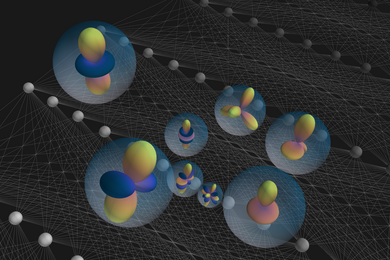
MIT research team finds machine learning techniques offer big advantages over standard experimental and theoretical approaches.
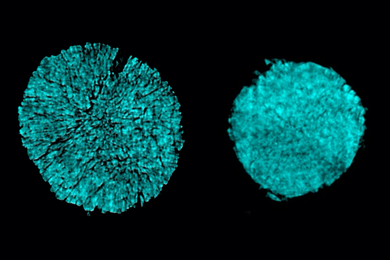
Use of a novel electrolyte could allow advanced metal electrodes and higher voltages, boosting capacity and cycle life.
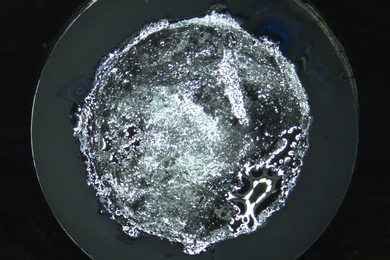
New findings may help unleash the potential of high-powered, solid-electrolyte lithium batteries.

National Academies study says fusion can help decarbonize US energy, calls for public-private approach to pilot plant operation by 2035-40.

The advance could boost recommendation algorithms and internet search.

Inspired by decades-old MIT research, the new technology could boost quantum computers and other superconducting electronics.
Structure may reveal conditions needed for high-temperature superconductivity.