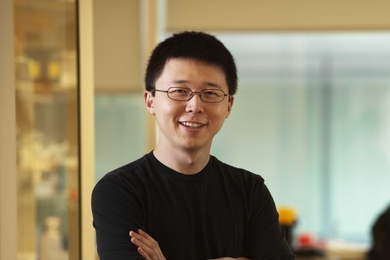
MIT welcomes 8 MLK visiting professors and scholars
Scholars’ diverse backgrounds enhance MIT community, research and teaching.
Scholars’ diverse backgrounds enhance MIT community, research and teaching.

A cancer-cell quirk could be exploited to develop new drugs that starve tumors.
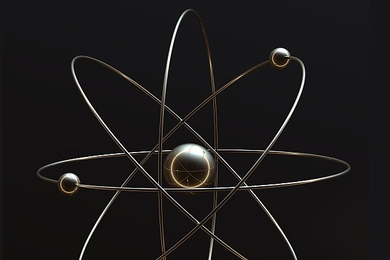
MIT study finds no shortage of uranium for nuclear energy for decades, but more research is needed to develop improved fuel-cycle options.

At a Brookings Institution event, the MIT president warns U.S. STEM-education gap to have ‘disastrous consequences’ on nation.
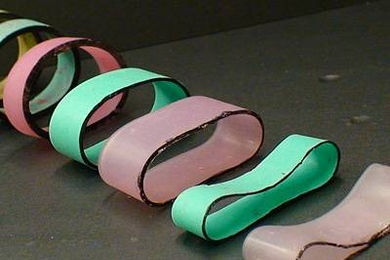
In a twist on a classic experiment, MIT researchers discover how flexible cylinders behave when rolling down a slope.

Research suggests ocean color is linked to formation, movement of tropical cyclones
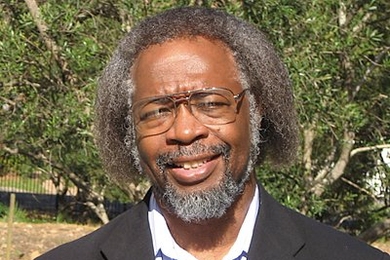
Supersymmetry pioneer will conduct research this year at MIT’s Center for Theoretical Physics.
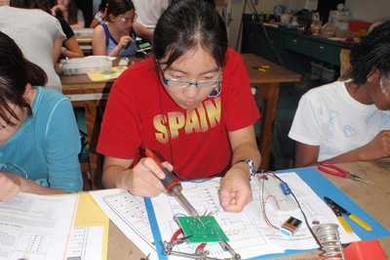
MIT Edgerton Center takes on NASA’s Summer of Innovation with 5 summer programs. Learn more about one of them.
Breaking up phosphorus with ultraviolet light may offer a safer, simpler way to build many industrial and household chemicals.

MIT chemists have synthesized a family of natural compounds that have shown promise in killing tumor cells.

‘TR35’ to be honored at Technology Review’s EmTech@MIT conference next month.
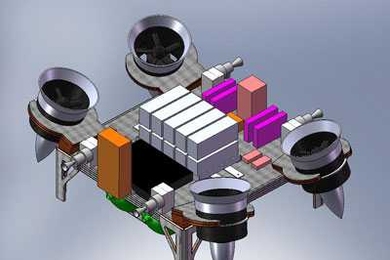
Team envisions robotic spacecraft that can explore hard-to-reach areas on the moon and other planetary bodies by hopping.