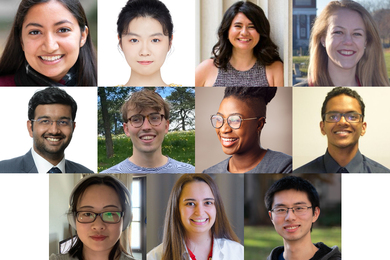
2021-22 Takeda Fellows: Leaning on AI to advance medicine for humans
New fellows are working on electronic health record algorithms, remote sensing data related to environmental health, and neural networks for the development of antibiotics.
New fellows are working on electronic health record algorithms, remote sensing data related to environmental health, and neural networks for the development of antibiotics.
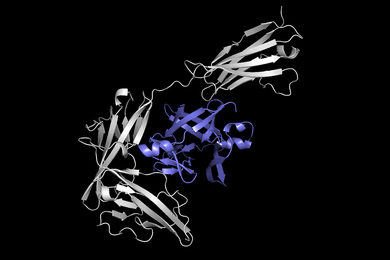
The machine-learning model could help scientists speed the development of new medicines.
MIT Energy Initiative edX course asks students to rethink how we operate power systems.
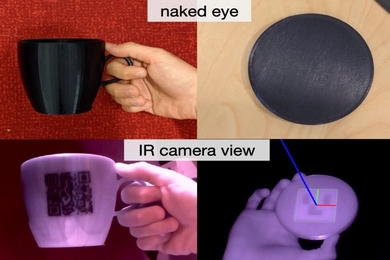
An MIT team develops 3D-printed tags to classify and store data on physical objects.
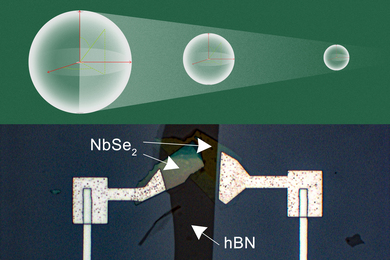
Using ultrathin materials to reduce the size of superconducting qubits may pave the way for personal-sized quantum devices.

A new method automatically describes, in natural language, what the individual components of a neural network do.
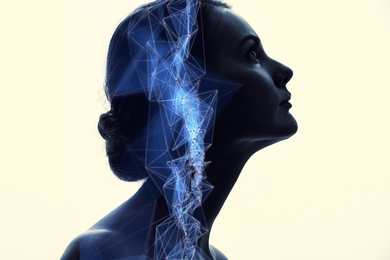
MIT scientist Rosalind Picard collaborates with clinicians to develop tools for mental health care delivery.
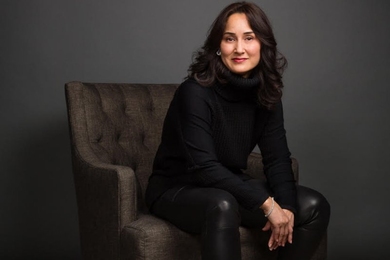
Overseeing business and research units across MIT Open Learning, Breazeal will focus on the future of digital technologies and their applications in education.

Twist is an MIT-developed programming language that can describe and verify which pieces of data are entangled to prevent bugs in a quantum program.
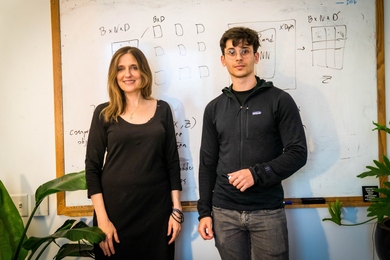
Scientists demonstrate that AI-risk models, paired with AI-designed screening policies, can offer significant and equitable improvements to cancer screening.
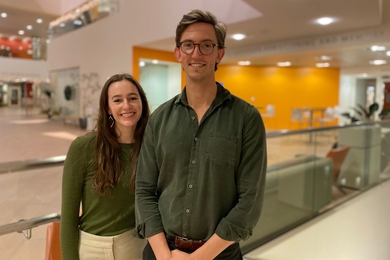
MIT computer scientists and mathematicians offer an introductory computing and career-readiness program for incarcerated women in New England.
Researchers have created a method to help workers collaborate with artificial intelligence systems.
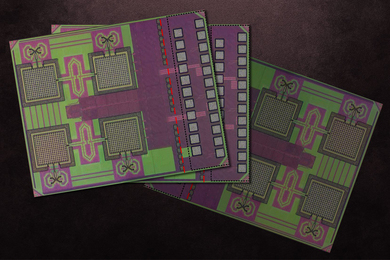
MIT researchers lay out a strategy for how universities can help the US regain its place as a semiconductor superpower.
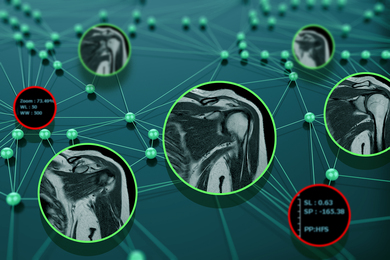
Researchers develop a way to test whether popular methods for understanding machine-learning models are working correctly.

MIT EECS student and Mitchell Scholar hopes to play music in Dublin while working on his MS in intelligent systems.