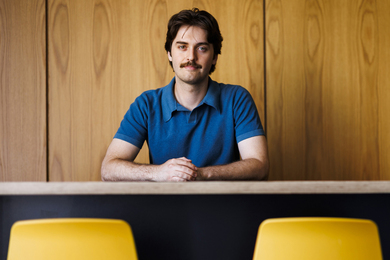
Gage Coon: An Earth scientist exploring the power of microbes
The PhD student’s research on how microorganisms digest compounds in their environment could enable advances in wastewater treatment.
The PhD student’s research on how microorganisms digest compounds in their environment could enable advances in wastewater treatment.
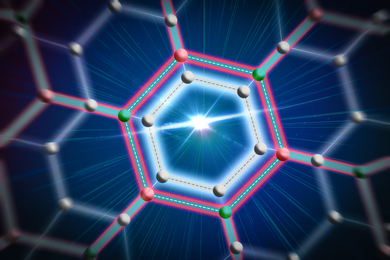
A new technique produces wafer-scale samples, overcoming a major roadblock to using these materials in quantum technologies.
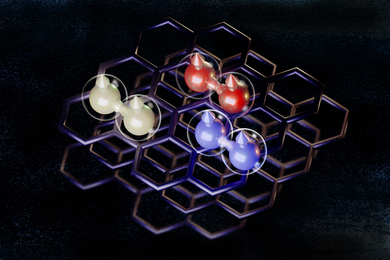
What’s more, the superconducting states get stronger under conditions expected to kill them.
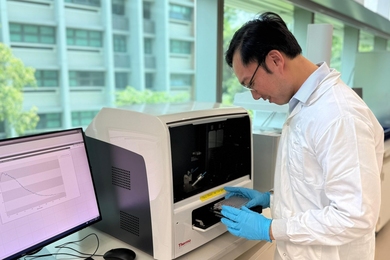
Researchers developed an optical nanosensor to rapidly detect a key gut biomarker, enabling faster, accessible screening.
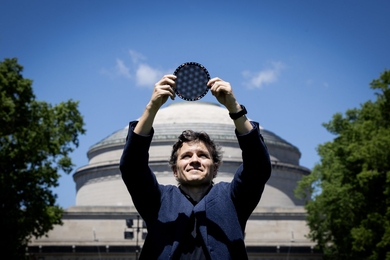
The MIT physicist shares the honor with two others for foundational research establishing the field of twistronics.
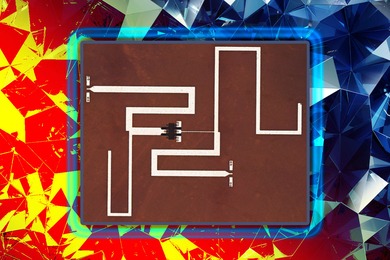
By using a thin layer of diamond to manage excessive heat, researchers can boost the speed and energy-efficiency of next-generation wireless devices.
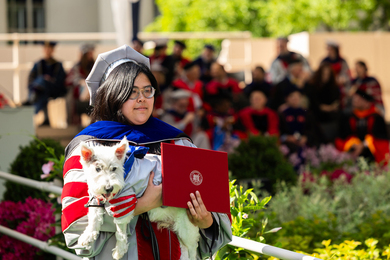
Vinny, an unofficial member of the Strano Lab at MIT, dressed up to celebrate Commencement alongside his human, Michelle Quien PhD ’26.
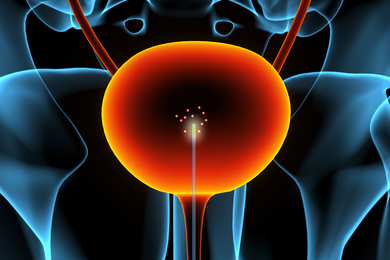
Using a catheter coated with carbon nanotubes, researchers can detect biomarkers produced by cancer cells in the bladder.
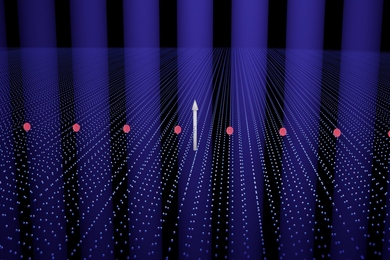
MIT physicists have discovered 3D “moiré crystals” that simulate four-dimensional quantum materials to a T.
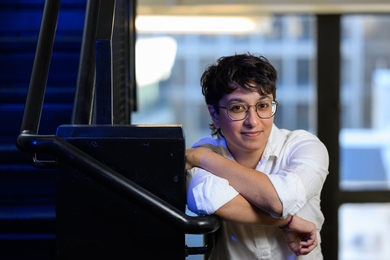
Using boron nitride nanotubes, mechanical engineering doctoral student Palak Patel develops materials for space that block dangerous ionizing radiation.
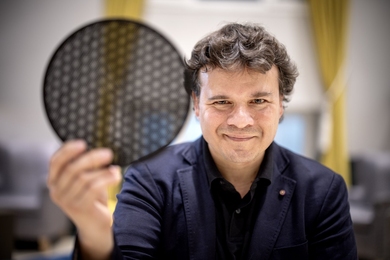
MIT physicist shares 400,000-euro award for influential work on “magic-angle” graphene.
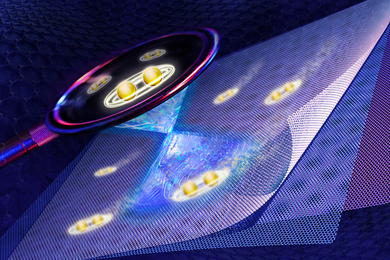
The findings could open a route to new forms of higher-temperature superconductors.
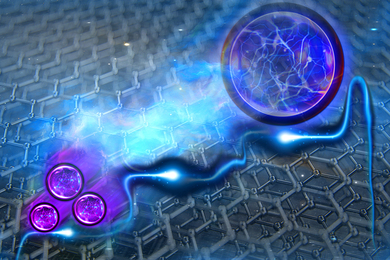
Jiaqi Cai and Zhengguang Lu independently discovered that electrons can become fractions of themselves.
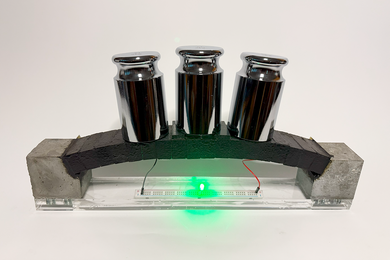
Improved carbon-cement supercapacitors could turn the concrete around us into massive energy storage systems.
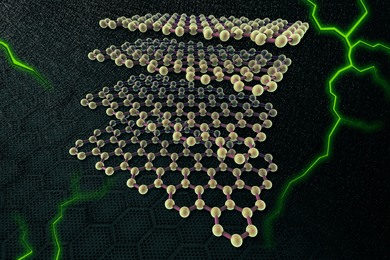
Scientists have discovered a link between the material’s pore size distribution and its ability to withstand radiation.