
The catch to putting warning labels on fake news
Study finds disclaimers on some false news stories make people more readily believe other false stories.
Study finds disclaimers on some false news stories make people more readily believe other false stories.

“To stay ahead, the U.S. needs to do more to capitalize on our own strengths,” he tells representatives.

System ensures hackers eavesdropping on large networks can’t find out who’s communicating and when they’re doing so.
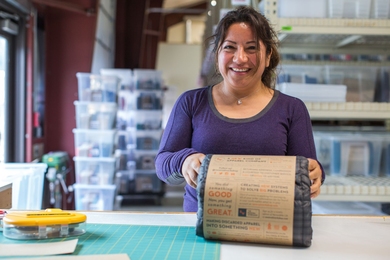
Tech-based solutions sought for challenges in work environments, education for girls and women, maternal and newborn health, and sustainable food.

Design combines a common diaper material with RFID technology.
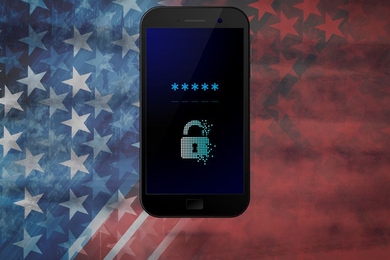
Mobile voting application could allow hackers to alter individual votes and may pose privacy issues for users.
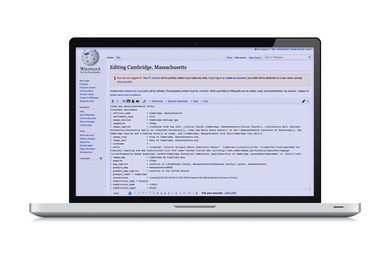
Text-generating tool pinpoints and replaces specific information in sentences while retaining humanlike grammar and style.

MIT’s new system TextFooler can trick the types of natural-language-processing systems that Google uses to help power its search results, including audio for Google Home.
CCI and Takeda collaborate on a theoretical approach leveraging networks of people and machines in support of individuals experiencing depression.

Academic, government, and advocacy leaders gathered to promote collaborative research partnerships to identify strategies that help workers thrive in today’s labor market.
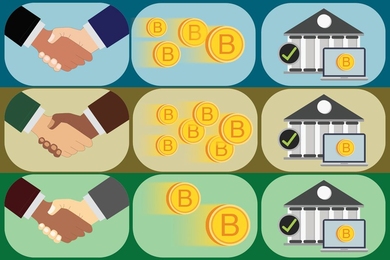
Routing scheme boosts efficiency in networks that help speed up blockchain transactions.
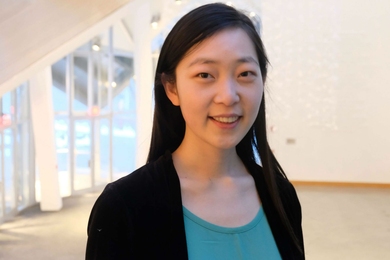
Doctoral candidate Natalie Lao wants to show that anyone can learn to use AI to make a better world.

“Father of GPS” honored with three colleagues for creating the first truly global, satellite-based positioning system.

New book explores the use of blood in political rhetoric, imagery, and activism, and even the politics of blood drives.

Taught by faculty in the MIT Sloan School of Management, MIT’s fifth MicroMasters program offers learners an opportunity to enhance their financial skill set.