
Myriam Heiman named director of The Picower Institute for Learning and Memory
Heiman, who studies neurodegenerative diseases such as Huntington’s and Parkinson’s, will lead the institute beginning July 1.
Heiman, who studies neurodegenerative diseases such as Huntington’s and Parkinson’s, will lead the institute beginning July 1.

Founded by Jake Donoghue PhD ’19 and former MIT researcher Jarrett Revels, the company is creating an AI-driven platform to help diagnose and treat disease.
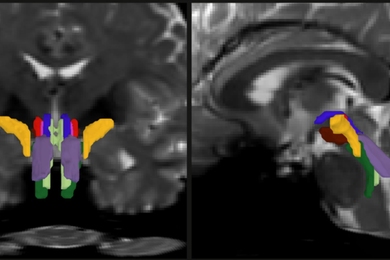
Opening a new window on the brainstem, a new tool reliably and finely resolves distinct nerve bundles in live diffusion MRI scans, revealing signs of injury or disease.
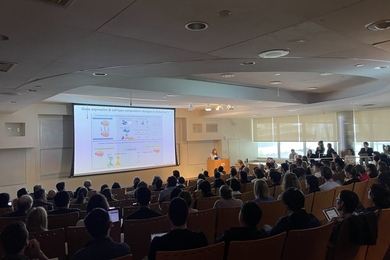
Speakers at MIT’s Aging Brain Initiative symposium described how immune system factors during aging contribute to Alzheimer’s, Parkinson’s and other conditions. The field is leveraging that knowledge to develop new therapies.
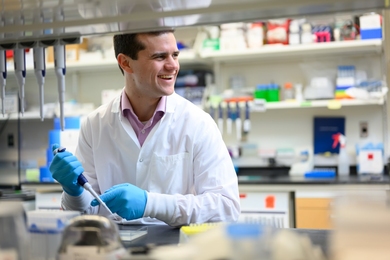
Graduate student and MathWorks Fellow Louis DeRidder is developing a device to make chemotherapy dosing more accurate for individual patients.

Co-hosted by the McGovern Institute, MIT Open Learning, and others, the symposium stressed emerging technologies in advancing understanding of mental health and neurological conditions.
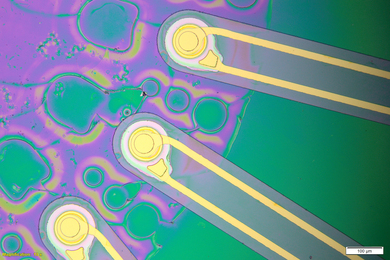
MIT engineers’ implantable ImPULS device could become an alternative to the electrodes now used to treat Parkinson’s and other diseases.

Thirteen new graduate student fellows will pursue exciting new paths of knowledge and discovery.
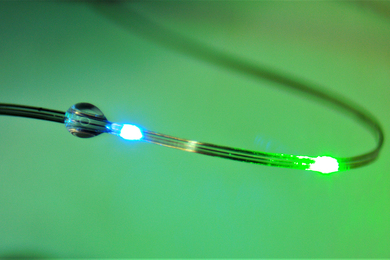
MIT engineers’ new technology can probe the neural circuits that influence hunger, mood, and a variety of diseases.

Over the years, dozens of student products from Class 2.009 (Product Engineering Processes) have inspired startups.
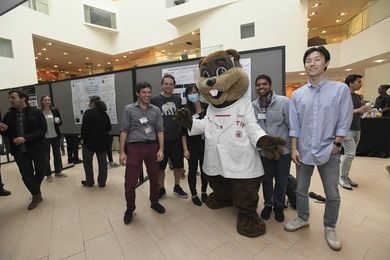
At an exhibition marking two decades since a transformative gift from the Picower Foundation, current and alumni members described research at the forefront of neuroscience and beyond.
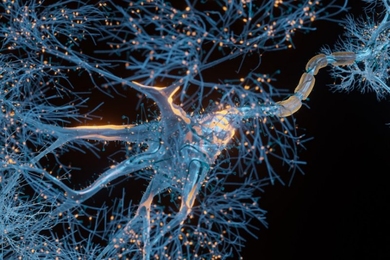
A machine-learning method finds patterns of health decline in ALS, informing future clinical trial designs and mechanism discovery. The technique also extends to Alzheimer’s and Parkinson’s.
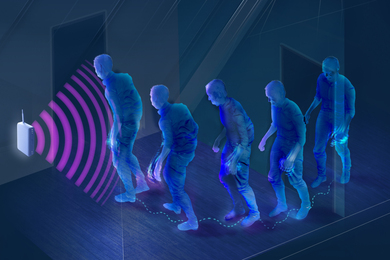
By continuously monitoring a patient’s gait speed, the system can assess the condition’s severity between visits to the doctor’s office.
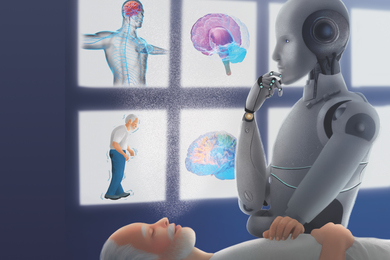
An MIT-developed device with the appearance of a Wi-Fi router uses a neural network to discern the presence and severity of one of the fastest-growing neurological diseases in the world.
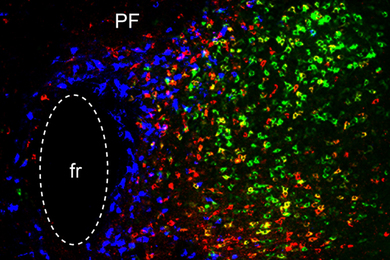
Targeting these circuits could offer a new way to reverse motor dysfunction and depression in Parkinson’s patients.